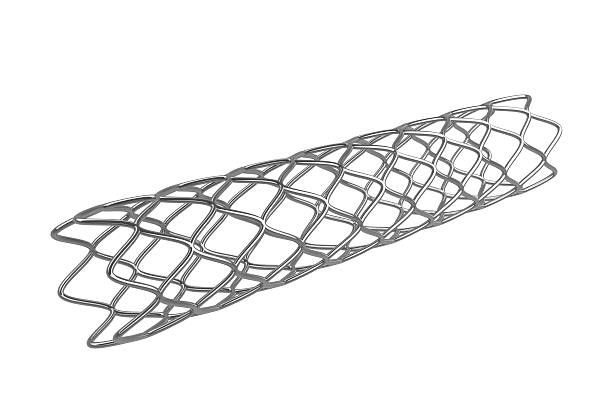
"A stent wire that is 0.001 inches out of spec does not just fail a quality audit - it can fail inside a patient. That is not an exaggeration. In medical device manufacturing, the wire you source is literally a life-or-death decision. And the margin for error is measured in ten-thousandths of an inch."
This is not an exaggeration. Medical device wire is not like standard industrial wire. It is subject to FDA oversight, ISO 13485 quality management requirements, and ASTM standards that exist specifically because failures in these materials can result in patient harm. When a cardiologist deploys a stent, or a surgeon uses guidewires during a minimally invasive procedure, those wires must perform with zero tolerance for dimensional drift, material inconsistency, or documentation gaps.
This guide is written for medical device engineers, procurement teams, and manufacturing quality leaders who understand that "close enough" is not an acceptable specification in this space. We will walk through material selection, tolerance requirements, compliance documentation, and real-world examples of what separates suppliers who can deliver medical-grade wire from those who cannot.
Why Wire Quality Is Non-Negotiable in Medical Devices
Medical devices live in one of the most heavily regulated industries in the world. Unlike many industrial applications, where failure is inconvenient or costly, failure in medical devices is a patient safety issue. The FDA does not grade wire suppliers on effort or intent. It grades them on results.
Wire used to make cardiovascular stents, orthopedic implants, minimally invasive surgical instruments, and neurovascular devices must meet three critical requirements simultaneously:
- Dimensional precision. A 316LVM stainless wire ground to plus-or-minus 0.0002 inch diameter tolerance cannot deviate without compromising the device's mechanical properties.
- Material consistency. The wire's tensile strength, elongation, hardness, and corrosion resistance must fall within defined ranges every single time.
- Complete documentation. From heat certificate to lot traceability to ASTM test results, every wire must have a documented pedigree that can withstand FDA audit scrutiny.
A wire supplier who delivers on two out of three does not deliver at all. There is zero room for "close enough" in medical wire.
Material Selection - Stainless, Nitinol, and Specialty Alloys
The material you select determines everything downstream: machinability, surface finish capability, tolerance holding, and most critically, biocompatibility. Here is a comparison of the primary wire materials used in medical device manufacturing:
Each material has specific machinability characteristics, heat-treat requirements, and post-processing considerations. 316LVM is the workhorse of cardiovascular wire - it is relatively machinable, cost-effective, and offers the biocompatibility profile most cardiac applications require. Nitinol is the premium choice for devices that need shape-memory or super elastic behavior, but it is significantly more difficult to hold tight tolerances and requires specialized processing. MP35N bridges the gap when you need higher strength than stainless but do not need shape-memory properties. Understanding these distinctions upfront prevents costly supplier changes later in your development cycle.
Tolerance Requirements That Separate Medical-Grade From Everything Else
This is where medical wire becomes unforgiving.
Standard industrial wire tolerances typically run ±0.005" diameter or ±0.010" for larger stock. That is "in the ballpark" thinking. Medical device wire often requires ±0.0002" or tighter. To put this in perspective, 0.0002" is approximately two microns - about one-fortieth the diameter of a human hair. A tolerance band this tight is not just difficult to achieve; it demands absolute process control.
Why? Because when a device engineer specifies a 0.020" diameter wire with ±0.0002" tolerance, they have done the finite element analysis, the fatigue testing, and the deployment simulation. That tolerance is not arbitrary. It is the result of understanding exactly how that wire will flex, how much stress it will experience, how the device will deliver, and what margin of safety is required.
Holding these tolerances requires:
- Centerless grinding with precision grinding wheels replaced frequently to avoid wear-related drift
- Statistical process control (SPC) monitoring on every batch to detect any shifts in the process
- Proper thermal stress relieving to avoid relaxation-induced dimensional growth after grinding
- Precision measurement of every diameter point - not just spot checks
- Environmental controls to prevent thermal expansion/contraction from affecting measurements
Most suppliers can achieve ±0.0005" if they really focus. Holding ±0.0001" consistently? That is when you are separating the specialists from the generalists. It is the difference between a wire supplier and a medical device wire partner.
The Documentation Trail - ISO 13485, ASTM F138, and FDA Expectations
A surgical stent with perfect dimensions but no documentation trail is worse than useless - it is a liability. The FDA does not just want evidence that your wire is good. The FDA wants evidence that you have a system to ensure every wire in every batch is good. This philosophy extends throughout medical device regulation and is codified in 21 CFR Part 820, which governs quality system requirements.
This means your wire supplier needs to operate under a quality management system. Not as a nice-to-have. As a minimum requirement. Having a quality management system is your assurance that the supplier has documented procedures, regular audits, and management commitment to quality.
Here is what that documentation trail includes:
- Heat certificate from the wire mill showing chemical composition, hardness, tensile strength, and elongation values
- ASTM F138 (or appropriate ASTM spec) compliance documentation certifying all requirements are met
- Lot traceability connecting your order to specific mill lots and drawing requirements
- Dimensional measurement data showing the distribution of measurements across the batch
- Surface finish specification and confirmation (Ra values in microinches)
- Certificate of Conformance (CoC) or Certificate of Analysis (CoA) signed by authorized personnel
- If additional testing is required (fatigue, corrosion, biocompatibility), third-party lab reports
During an FDA audit, your device company will need to hand over these documents. An FDA investigator who sees gaps in traceability or missing heat certificates will not mark it as "minor." It becomes a Form 483 observation (the FDA's first-level citation), and those observations can delay approvals, create pathway issues to market, or worse. Having a supplier who delivers complete documentation from day one eliminates this risk entirely.
Our Medical Wire Capabilities - The Real-World Story
A year ago, a Bay Area startup developing a Class III implantable cardiac device was three months from their FDA pre-submission meeting. They needed 316 stainless wire ground to ±0.0002" diameter tolerance with full certification and complete lot traceability. This was not a standard request - Class III devices are the most heavily scrutinized category in FDA medical device regulation.
They approached three established wire suppliers. All three quoted a price and a lead time. Two returned samples that looked good on the bench but came with incomplete documentation. One supplier claimed they could not reliably hold ±0.0002" on the diameter they needed. This is when they found us.
Western Steel & Wire took the job. We delivered certified wire with dimensional data showing 98 percent of samples within ±0.00015", and every mandrel came with a documentation package that included:
- Heat certificates from the mill documenting composition and mechanical properties
- Lot traceability codes
- Centerless grinding SPC data showing the process was in statistical control
- Full dimensional traceability - they could look up any specific mandrel and see the diameter distribution across that lot
- Certificate of Conformance signed by quality assurance
When the startup walked into their FDA pre-submission meeting two months later, the FDA reviewer asked to see the wire supplier documentation. The startup handed over our package. The FDA investigator did not ask a single follow-up question about the wire - the documentation was complete, the compliance was clear, and the traceability was transparent.
"Western Steel & Wire's documentation package was cleaner than suppliers five times their size. That is what got us through the FDA audit."
This is not a fluke. This is how we approach every medical wire order. We understand that in medical device manufacturing, there is no margin for shortcuts:
- We supply wire to 3 of the top 10 medical device companies
- Centerless grinding to ±0.0001" to ±0.0005" diameter tolerance, depending on application requirements
- Full lot traceability, heat certifications, and ASTM compliance on every order
- Surface finishes from Ra 4 to Ra 32 microinches
- We understand FDA documentation requirements - our certificates are audit-ready
Frequently Asked Questions About Medical Device Wire
What ASTM standard covers medical-grade stainless steel wire?
ASTM F138 is the primary standard for stainless steel wire used in medical implants and surgical instruments. It specifies chemical composition (including carbon content limits), mechanical properties, and testing methods. For music wire applications, you will reference ASTM A228. For oil tempered wire, ASTM A229. For nitinol wire, you will reference ASTM F2063. For cobalt-nickel-chromium alloys, ASTM F562. Each standard has specific requirements that cannot be waived.
What tolerances can you hold on medical wire?
For standard stainless and specialty alloys, Western Steel & Wire can hold ±0.0001" to ±0.0005" diameter tolerance depending on the material and wire size.
What documentation comes with medical wire orders?
Every order includes: mill heat certificate, ASTM compliance documentation, lot traceability codes, dimensional measurement data, surface finish verification, and Certificate of Conformance.
The Bottom Line
Medical device wire is not a commodity. It is a precision component that lives inside the human body or is used to deploy devices that do. The stakes are higher than in any other industry. A supplier who can deliver on dimensions and material properties but cannot provide clean documentation is not fully qualified. A supplier who can hit tolerances but does not understand quality requirements is not a partner - they are a risk.
When you are evaluating medical wire suppliers, ask for:
- References from at least two other medical device companies they supply (and verify those references)
- Proof of current quality system certification
- Sample documentation packages from similar orders
- A commitment to audit-ready documentation and lot traceability
Medical device wire sourcing is not about finding the cheapest supplier. It is about finding a partner who understands that precision, compliance, and documentation are not negotiable. Because in medical devices, the margin for error truly is measured in ten-thousandths of an inch. Choose your supplier accordingly.
___________________________________________________________________________
Western Steel & Wire - Medical Device Wire Specialist
Serving most demanding medical device companies with precision wire, full regulatory compliance, and documentation that passes FDA scrutiny.
Comments (0)
Leave a Comment