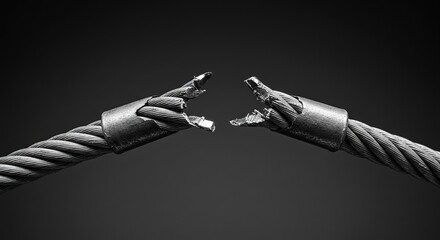
A medical device company in San Jose, CA nearly recalled 12,000 catheter guidewires last year. The root cause? Their wire supplier substituted ASTM A227 spring wire where the spec called for ASTM A228 music wire. The cost of that single material swap: $2.3 million in testing, regulatory filings and lost production time.
This isn't a cautionary tale meant to alarm you. It's a wake-up call.
If you're an engineer, procurement professional, or manufacturing manager working with precision wire, especially in medical devices, aerospace, or automotive applications, the difference between music wire and spring wire can determine whether your product passes FDA audit, meets fatigue requirements, or ships on time. Yet we see engineers make this call based on price alone, supplier convenience, or incomplete specifications.
This guide breaks down the science, the specifications, and the real-world consequences of getting wire selection wrong. By the end, you'll understand not just the difference between ASTM A228 and ASTM A227, but when each wire type is actually worth the cost.
The Core Difference - Chemistry, Not Marketing
Think of music wire like the Olympic athlete of carbon steel wire - it's trained to the highest standard from raw material through final delivery. Spring wire is a solid athlete who can handle most sports well. Both are high-carbon steel. Both can be drawn to precise diameters. But the manufacturing process, material certification, and defect tolerance are completely different.
ASTM A228 music wire is patented high-carbon steel (typically 0.65-0.85% carbon content by weight) that undergoes rigorous cleaning, annealing, and testing at every production step. The raw material is checked. The drawn wire is checked. The fatigue properties are validated against exacting standards. Inclusions are limited to trace levels. Sulfur and phosphorus content - the elements that make steel brittle - are held to minimums that would be considered acceptable impurities in other applications but not here.
ASTM A227 spring wire is also high-carbon steel (typically 0.60-0.75% carbon), but with more permissive limits on impurities and less stringent manufacturing controls. It's cleaner and stronger than mild steel, but it's not refined to the same degree. The defect tolerance is wider. The traceability requirements are less strict. Think of it as the difference between a car certified for a Formula 1 race and a well-maintained sedan on the highway - both will get you where you're going, but their performance envelopes are different.
Why does this matter to you? Because when a guidewire needs to cycle 10 million times without breaking, when a suspension spring must support a aerospace payload at extreme temperatures, or when a catheter must maintain curve retention through sterilization and delivery, those material refinements stop being theoretical and become mission critical.
Head-to-Head: ASTM A228 vs. ASTM A227
This table captures the key property differences between music wire and spring wire:
When Music Wire Is Worth the Premium (and When It's Overkill)
Let's be direct: music wire costs 40-70% more than spring wire. That premium is justified in certain applications and unnecessary in others. Understanding the distinction saves you both money and regulatory headaches.
Music wire is worth the premium when:
- You're working under a regulatory framework (FDA, aerospace, automotive) that demands material traceability and certified fatigue performance. Medical device OEMs almost always require ASTM A228. The audit alone justifies the cost.
- Your application involves cyclical loading in the millions of cycles. Guidewires, suspension springs, actuator wires, and sensor elements live or die by endurance limits. Music wire extends fatigue life by 20-40% in many applications.
- You're working with diameters smaller than 0.032 inches. The smaller the wire, the more critical material consistency becomes. Music wire maintains its properties at micro-scales where spring wire begins to show variability.
- You're designing implantable or life-critical applications. If the wire fails, people get hurt. Use music wire.
Spring wire is perfectly adequate when:
- Your application is non-life-critical and non-regulated. Garden tool springs, industrial equipment brackets, and general-purpose fasteners. Here, spring wire delivers strength at a reasonable cost.
- Load cycles are in the thousands, not millions. A spring that cycles 10,000 times will never fail in service regardless of whether it's music wire or spring wire.
- Your wire diameter is larger than 0.064 inches. At larger scales, both materials perform consistently.
- Cost is the primary constraint and performance margins are wide.
Real-World Applications: Where Each Wire Type Dominates
The best way to understand when to use each wire type is to see where industry has already made the choice.
Music Wire Dominates In:
- Medical Devices - Guidewires, stents, catheter components, and implantable device assemblies almost universally specify ASTM A228. This is the regulatory standard, and suppliers know it.
- Aerospace Components - Engine instrumentation, flight control system springs, and landing gear components require documented fatigue life and traceability. Music wire is standard.
- Precision Instruments - Measuring devices, optical instruments, and precision sensors require micro-scale reliability. Music wire's consistency at small diameters is essential.
- Automotive Safety Systems - Suspension springs in luxury vehicles, spring elements in seat belts, and components in electronic parking brakes are often music wire to exceed safety margins.
Spring Wire Dominates In:
- Industrial Machinery - General-purpose springs, fastening hardware, and structural supports where reliability margins are wide.
- Consumer Products - Springs in pens, locks, hinges, and consumer tools where cycle life is measured in thousands, not millions.
- Construction Hardware - Fasteners, clips, and hangers where cost efficiency matters more than extreme fatigue performance.
- Large-Diameter Applications - Compression springs larger than 0.25 inches typically use spring wire; the advantage of music wire narrows at scale.
The Fatigue Factor - Why Cycle Life Changes Everything
If there's one thing that separates music wire from spring wire in practice, it's fatigue endurance. This deserves its own section because it's where the real cost of material selection emerges.
Fatigue is what happens when a material is stressed repeatedly at stress levels below its tensile strength limit. A spring might never break under a single load, but after millions of cycles at 70% of its load capacity, microscopic cracks begin at impurities and grain boundaries. Eventually, catastrophic failure.
Music wire's lower impurity content means fewer initiation points for fatigue cracks. Its superior tensile strength means you can operate at higher absolute stresses while maintaining the same safety margin. Combine these, and music wire will often endure 2-3 times the stress cycles of comparable spring wire before failure.
For a guidewire that must maintain position through 5 million patient breathing cycles over 30 days, that 2-3x improvement is the difference between a wire that lasts the intended life and one that fails mid-procedure. For an automotive suspension spring cycling 50 million times over a vehicle's lifetime, music wire provides safety margin that could prevent a failure-induced accident.
The engineering rule of thumb: if your design cycle count exceeds 1 million cycles, run your fatigue analysis with music wire properties. If spring wire satisfies your fatigue safety factor at those cycles, you're good. If not, music wire is not optional, it's a design requirement.
Common Substitution Mistakes That Cost Engineers Their Jobs
We've worked with dozens of companies through the consequences of wire substitutions. Here are the patterns we see repeat:
Mistake #1: "The specs say music wire, but the supplier only has spring wire in stock. It's the same diameter, so it should work."
This is the substitution that led to the San Jose medical device recall mentioned at the start. Diameter is one property. Carbon content, impurity limits, and fatigue endurance are completely different. If your specification says ASTM A228, there's a reason - usually because fatigue testing or regulatory approval was conducted on A228 wire specifically. Substituting A227 invalidates your testing.
Mistake #2: "We're moving production overseas. The new supplier says they can deliver A228-equivalent wire at A227 pricing."
ASTM specifications are ASTM specifications. There's no such thing as "equivalent." If the wire doesn't carry ASTM A228 certification with third-party verification, it doesn't meet the spec. Counterfeit, or misrepresented material is a serious risk in offshoring. Insist on certified test reports and traceability.
Mistake #3: "We'll use spring wire now and switch to music wire in production to save initial prototyping costs."
Prototypes need to be designed and tested with the material that will be in production. If your fatigue behavior is different between prototype and production, you're validating the wrong design. Use the production material from day one.
Mistake #4: "The engineer who specified music wire left the company. Nobody knows why it's required, so let's save money and use spring wire."
This is a documentation failure, not a design decision. Specifications exist for reasons - regulatory compliance, fatigue testing, supplier audit trails. Change the specification only if you repeat the entire engineering and validation process with the alternative material. Don't guess.
Frequently Asked Questions
Q: Can I substitute spring wire for music wire?
A: Not without re-engineering, re-testing, and re-validation. Substitution changes material properties, fatigue performance, and regulatory standing. If your design was validated with music wire, switching to spring wire invalidates that validation. This requires full re-qualification, which is more expensive than just buying the correct material in the first place.
Q: What's the fatigue life difference between music wire and spring wire?
A: Music wire typically sustains 20-40% higher stress levels at the same cycle count, or alternatively, can survive 2-3 times more cycles at the same stress level. The exact difference depends on wire diameter, heat treatment, and surface finish. Always run fatigue analysis for your specific application rather than relying on general estimates.
Q: Is music wire worth the 40-70% price premium?
A: Yes, if your application meets any of these criteria: regulatory requirements (FDA, aerospace), cycle counts exceeding 1 million, wire diameter smaller than 0.032 inches, or life-critical function. No, if you're building garden tool springs or consumer hardware. Be honest about your application needs.
Q: What carbon content defines music wire?
A: ASTM A228 music wire specifies 0.70-0.80% carbon content by weight. Spring wire (ASTM A227) allows 0.60-0.75%. Higher carbon content increases strength and hardness but also requires more rigorous heat treatment to avoid brittleness. The carbon specification is one piece of ASTM A228 - impurity limits, surface quality, and traceability requirements matter equally.
Q: Which wire type should I use for medical devices?
A: Music wire (ASTM A228) is the standard for medical devices because regulatory bodies expect it. FDA reviewers are familiar with A228 properties, fatigue limits, and suppliers. If you use spring wire, you'll need to justify it with additional testing and documentation, which negates any cost savings. Use music wire unless your application is explicitly non-critical (e.g., a decorative wire, not a load bearing one).
The Bottom Line
Music wire and spring wire are both high-carbon steels, but music wire is refined to a higher standard - tighter impurity limits, stricter fatigue testing, certified material traceability, and superior endurance performance. That refinement costs 40-70% more per pound.
The question isn't whether music wire is "better" - of course it is. The question is whether your application demands that level of performance. If you're designing a medical device, an aerospace component, or anything that must survive millions of stress cycles without failure, the answer is yes. If you're building a consumer product or industrial equipment with low cycle counts, spring wire is adequate and music wire is overkill.
The expensive mistake is making this decision based on convenience or incomplete information. Every engineer and procurement professional reading this should have a clear decision tree: Is this application regulated? How many stress cycles? How critical is failure? Answer those questions first, then select the wire type.
And if you're sourcing either material, demand full ASTM certification, heat lot traceability, and third-party test reports. Certification is not a luxury - it's the documentation that proves your material meets spec when regulators or customers ask.
Why This Matters for Your Supply Chain
Western Steel & Wire has spent over 90 years helping engineers and procurement teams navigate material selection for regulated and high-performance applications. Here's what we've learned works:
- We supply music wire to 3 of the top 10 medical device companies, with 100% on-time delivery and zero delivery-related quality issues.
- Every shipment has ASTM A228 certification and heat lot traceability - documentation clean enough to pass FDA audit on the first attempt.
- Our centerless grinding service holds ±0.0002" diameter tolerances, enabling customers to work with smaller wire sizes and extend fatigue life through tighter manufacturing controls.
- We maintain supplier relationships with mills that specialize in ASTM A228, ensuring consistent material properties and supporting your long-term supply chain stability.
If you're sourcing music wire or spring wire, or if you're unsure which specification is right for your application, we can help. Reach out with your specifications, and let's make sure you're buying the right material for your design, your budget, and your regulatory requirements.

Comments (0)
Leave a Comment