Your ironworkers tie 300 to 500 rebar intersections every single day. That's 2,500 ties per week. 10,000 per month. At that volume, the wire they're pulling off the spool isn't just a consumable - it's a productivity tool. And if it's the wrong gauge, wrong temper, or wrong packaging, you're bleeding time and money on every single tie.
Why Tie Wire Isn't Just Wire - The Hidden Productivity Factor
Here's what your guys already know, even if your purchasing department hasn't figured it out yet: not all rebar tie wire is created equal.
The difference between a spooled 16-gauge wire from a big-box supplier and a properly annealed 16-gauge on a tight coil isn't just wire - it's the difference between smooth, consistent ties and frustrated ironworkers fighting with kinks, tangles, and breakage. And when your crew is pulling 420 ties per day, 'fighting with the wire' adds up fast.
The best tie wire is almost invisible to your crew - they don't think about it. It pulls off the spool without twisting. It doesn't break mid-tie. It doesn't leave them reshaping wire every few seconds. That's the mark of good material, good temper, and good packaging.
Western Steel & Wire supplies tie wire to construction crews domestically and internationally- from small residential pours to major commercial projects. Same-day shipping on 16-gauge in coils and spools. Bulk pricing that beats the big-box stores, with wire that works. Our wire runs 50,000-70,000 PSI tensile - the sweet spot for hand-tying without over-hardening.
The Real Cost of Choosing Wrong: A San Jose Case Study
A concrete contractor in San Jose was averaging 420 ties per day per ironworker. After switching from a big-box 16-gauge to Western Steel's 16-gauge annealed wire on 3.5 lb coils (instead of random-wound spools), tie speed increased to 480 per day. That's a 14% productivity boost - translating to roughly $18,000 saved per year across a 6-person crew.
"Nobody thinks about tie wire until it's slowing them down. Once we switched, my guys didn't want to go back." That's a direct quote from their foreman. And that's the insight that matters most: good wire isn't a cost item. It's an investment in crew efficiency.
Here's the math: if a crew of six iron workers each saves 60 minutes per week by using better tie wire, that's 6 hours × 52 weeks × $45/hour (fully loaded labor cost) = $14,040 annually, just in time savings. Add in reduced rework from broken ties, fewer injuries from wire-handling frustration, and less overall crew fatigue, and the real savings are closer to $20,000-$25,000 per year for a mid-sized crew.
Material Options: Black Annealed, Galvanized, Stainless, and PVC-Coated
Not all rebar tie wire is the same material. Here's the breakdown:
Black annealed is the industry standard for a reason: it balances strength, workability, and cost. The material has been treated through an annealing process to achieve optimal ductility while maintaining adequate tensile strength. Unless you're in a harsh environment (salt spray, extreme humidity) or tying finished concrete that can't show marks, black annealed is your go-to.
Galvanized wire adds a zinc coating that protects against rust and corrosion. It's ideal for projects in coastal areas, parking structures, or any environment where moisture exposure is a concern. The trade-off is higher cost (typically 15-25% premium) and slightly more challenging handling due to the coating.
Stainless steel (304 or 316 grade) provides maximum corrosion resistance but comes at a significant cost - often 50-100% more than black annealed. It's specified for high-durability applications and where corrosion could compromise the structure's lifespan.
Packaging Matters More Than You Think (Coils vs. Spools vs. Reels)
Here's where a lot of purchasing departments drop the ball: they focus on the wire and ignore the packaging. Big mistake.
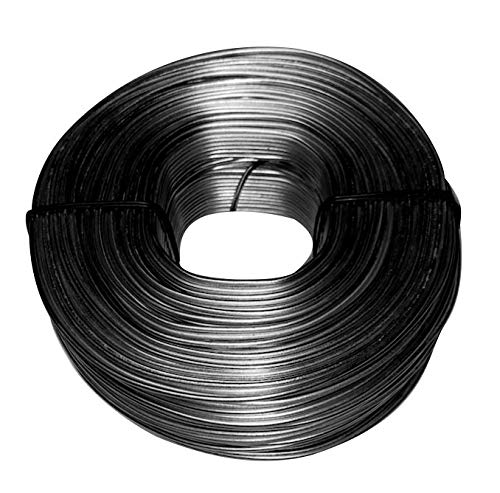
3.5 lb Coils (Preferred for Hand-Tying):
Tight, flat coils that feed consistently without twisting or binding. Light enough that crew can carry multiple coils in one hand. Wire doesn't tangle or kink. You get approximately 115 ties per 3.5 lb coil of 16-gauge. No waste, no incomplete partial coils left at day's end.
Random-Wound Spools (Cost-Cutting Move That Costs More):
Wire is looped loosely, creating dead space in the middle of the spool. Inconsistent feed when pulling wire. Wire binds, tangles, and gets caught on itself. Crew wastes time fighting with the spool instead of tying. Tensile properties can vary because the wound tension is uncontrolled. Often results in 20-30% waste and crew frustration.
Large Reels (50-100 lbs, Machine or Bulk Operations):
Used when you have automated tie machines or need massive volume on a single project. Requires a heavy-duty spool stand and infrastructure. Not practical for hand-tying crews moving between job sites or for mobile crews.
Pro tip: Ask your supplier what their coil wind spec is. Tight, consistent winding at 15-25 winds per inch is the gold standard. Loose winding wastes space, causes feed problems, and increases waste significantly. A good supplier will guarantee consistent wind tension across all coils.
How Much Tie Wire Do You Actually Need? (The Math)
This is the calculation that keeps purchasing managers up at night. Over-order and you're stuck with excess wire taking up warehouse space. Under-order and you're buying emergency supplies at inflated prices, plus paying expedited shipping.
The standard rule of thumb: you need approximately 150-200 feet of wire per ton of rebar, depending on rebar size and tie pattern. This formula has been tested on thousands of projects and remains the most reliable industry benchmark.
Here's the breakdown:
- #5 and #6 rebar: approximately 150 feet per ton (larger diameter = fewer ties per ton due to wider spacing)
- #4 and smaller: approximately 200 feet per ton (more intersections = more ties required for adequate spacing)
- Double-tie patterns: Add 20-30% to account for extra wire per intersection
Example: You're pouring a 500-ton structural slab with #5 rebar and a standard tie pattern.
500 tons × 150 feet per ton = 75,000 feet of wire needed
Using 16-gauge on 3.5 lb coils: 75,000 feet ÷ 335 feet per coil = 224 coils (roughly 19 cases of 12 coils each, or about 784 lbs total). Add 10% for waste and rework = 246 coils total, approximately 862 lbs.
Don't just guess at tie wire quantities. Know your rebar tonnage, your tie pattern, and your crew's consumption rate. It only takes one emergency reorder to pay for the time spent getting the order right the first time. Proper planning prevents costly last-minute supplier calls.
Pro Tips: Storage, Handling, and Getting the Most Out of Every Coil
Once the wire arrives on site, proper storage and handling make a huge difference in how it performs in your crew's hands. Small investments in site management pay big dividends.
Keep It Dry:
Black annealed wire will surface rust if exposed to moisture for extended periods. Store coils in a dry, shaded area - not in standing water or exposed to rain. A simple tarp or covered area works fine. Rust doesn't affect the wire's structural properties, but it can cause feed problems and rough edges that catch crew members' hands.
Organize by Gauge (Clearly):
Nothing kills efficiency like crew members grabbing the wrong gauge mid-tie. Use clearly labeled bins or pallets. Label coils with permanent marker if they're loose on site. Color-coded bins or painted identification work well for crew clarity.
Use Coil Dispensers or Bags:
Plastic coil bags (available from most suppliers) keep coils from unwinding and tangling during transport and on site. Worth the extra cost if your crews are moving between multiple locations or handling wire frequently.
Rotate Stock (FIFO):
Wire has no expiration date, but first-in-first-out inventory management keeps you from accumulating old stock that may have absorbed moisture or lost temper over time.
Give Crew Ownership:
Assign one person to manage the tie wire supply on site. Not to be controlling, but to ensure consistency and prevent mixing of gauges or materials. Your crew knows which supplier and gauge they prefer. Let them provide input on reorders.
Frequently Asked Questions About Rebar Tie Wire
Q: How much tie wire do I need per ton of rebar?
A: The industry standard is 150-200 feet of wire per ton, depending on rebar size. #5 and larger: approximately 150 feet per ton. #4 and smaller: approximately 200 feet per ton. Double-tie patterns add 20-30% to that total. Always calculate based on your actual rebar tonnage and tie pattern, not guesswork.
Q: Can I use galvanized tie wire on rebar?
A: Yes, galvanized tie wire is acceptable for structural rebar, especially in corrosive environments like coastal areas, parking structures, or industrial sites. However, galvanized is typically more expensive (15-25% premium) and has slightly lower tensile strength than black annealed. It's a smart trade-off for corrosion resistance, but black annealed remains best for cost and ease of tying.
Q: What's the difference between coils and spools?
A: Coils (tight, flat, 3.5 lbs) feed smoothly and don't tangle. Spools (loose, random wound) waste space and cause binding. For hand crews, coils are superior in every way. Spools are a cost-cutting move that often costs more due to reduced productivity, increased waste, and crew frustration.
Q: Does tie wire need to meet ASTM standards?
A: Structural tie wire should comply with ASTM A82 (carbon steel, hard drawn), ASTM A641 (galvanized), or ASTM A580 (stainless). Check your project specifications - most structural concrete requires materials that meet ASTM standards. Verify with your engineer but never assume 'close enough' code compliance is non-negotiable.
The Bottom Line: Invest in the Right Tie Wire
Rebar tie wire doesn't make headlines. It's not part of the conversation at project reviews or owner meetings. But it's one of the most high-volume, high-touch materials on a structural concrete project. And that means it matters.
The right tie wire - proper gauge, proper temper, proper packaging - eliminates friction between your crew and the material. It's a small detail that compounds across thousands of ties. Your crew gets home on time instead of finishing in darkness. The project schedule is held. Quality stays consistent. You avoid the rework and schedule delays that come from fighting poor-quality wire.
If you're still buying tie wire based on price alone, or from whoever's closest to the job site, you're leaving productivity on the table. The San Jose contractor we mentioned? They didn't switch wire because they wanted to spend more money. They switched because their crew demanded it - and the 14% efficiency gain proved they were right.
Talk to Western Steel & Wire about tie wire for your next project. We know what works in the field because we supply contractors who tie thousands of intersections every single week. Same-day shipping, bulk pricing that saves money, and wire that your crew will prefer using. Our reputation is built on providing wire that works.

Comments (0)
Leave a Comment