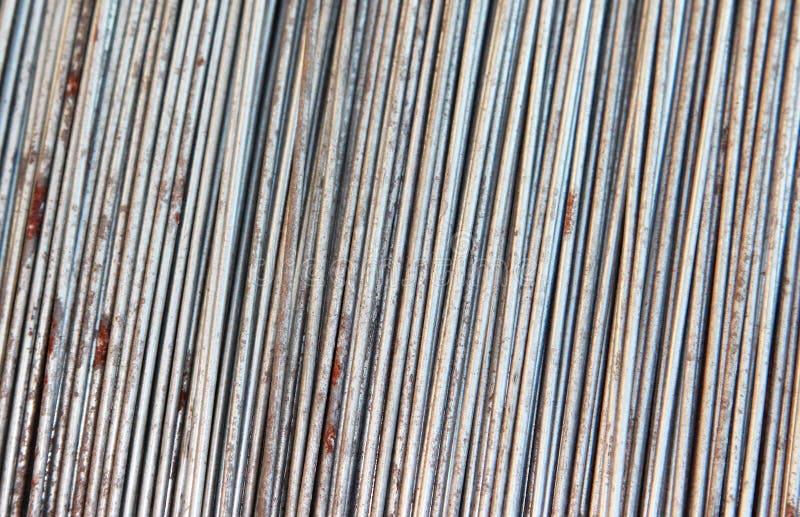
A food processing plant in Fresno, CA had an expensive problem. They installed 304 stainless wire mesh in a CIP washdown area, an area regularly exposed to chlorinated cleaning solutions. Eighteen months in, the mesh was corroding. The replacement cost? $47,000. The original upgrade to 316 would have cost them an extra $4,200.
That issue happens more often than you think. Engineers and procurement teams face a daily choice: 304 or 316 stainless steel wire. And the choice is not always obvious. Both are austenitic stainless steels. Both are non-magnetic. Both resist corrosion far better than carbon steel. But in the wrong environment, 304 fails catastrophically, and 316 costs a little more upfront but saves tens of thousands in downtime and replacements.
The question is not "which is better?" It is "which is right for your application?" This guide walks you through chemistry, the real-world stakes, and the decision framework that helps you choose correctly the first time.
The Real Difference: Molybdenum Changes Everything
Here is the chemistry: both 304 and 316 are austenitic stainless steels built on a foundation of chromium and nickel. But there is one critical element that separates them.
304 contains 18% chromium, 8-10.5% nickel, and no molybdenum. This combination offers excellent general corrosion resistance and is non-magnetic. It is tough, formable, and affordable.
316 contains 16-18% chromium, 10-14% nickel, and crucially, 2-3% molybdenum. That molybdenum is a game changer. It dramatically improves resistance to pitting and crevice corrosion, the types of localized failures that occur in chloride-rich, wet, or salty environments.
Think of chromium as the shield and molybdenum as the force multiplier. Chromium protects stainless steel from general corrosion by forming a passive oxide layer. Molybdenum makes that layer tougher against chloride attack, the kind of attack that happens in saltwater, food processing washdowns, and industrial cooling systems.
Both 304 and 316 are staples in our inventory at Western Steel & Wire.
Head-to-Head Comparison: The Money Table
| Property | 304 Stainless | 316 Stainless | Why It Matters |
|---|---|---|---|
| Chromium % | 18% | 16-18% | Corrosion resistance base element |
| Nickel % | 8-10.5% | 10-14% | Ductility and formability |
| Molybdenum % | None (0%) | 2-3% | Chloride pitting resistance: the game changer |
| PREN Score | ~30 | ~43 | Higher = more pitting resistance |
| Tensile Strength (psi) | 86,000-100,000 | 85,000-100,000 | Comparable |
| Max Service Temp | 1,600 degrees F | 1,600 degrees F | Thermal resistance is similar |
| Cost Premium | Baseline | +15-25% | Small upfront cost; massive downtime savings |
| Chloride Resistance | Poor in high-chloride environments | Excellent; up to 6x better PREN | Determines coastal, food processing safety |
| Common Applications | Indoor systems, light duty, food contact (dry) | Coastal, washdown, CIP, marine hardware | Choose based on your corrosion exposure |
The PREN Score: The Number That Predicts Corrosion Failure
Materials engineers use a formula called PREN (Pitting Resistance Equivalent Number) to predict how stainless steel will perform in chloride-rich environments. The formula is:
PREN = Cr + 3.3(Mo) + 16(N)
Where Cr is chromium %, Mo is molybdenum %, and N is nitrogen %.
For 304: PREN is approximately 18 + 0 + 0 = 30
For 316: PREN is approximately 17 + 9.9 + 0 = 43
What does this mean in practical terms? A PREN of 30 means 304 will resist corrosion in mild industrial and indoor applications. But in the presence of chlorides, whether from saltwater spray, road salt residue, or chlorine-based cleaners, it will pit and fail. A PREN of 43 means 316 can handle most coastal and food processing environments without pitting for 5-10+ years, depending on salinity and temperature.
The PREN formula reflects decades of empirical testing. Chromium forms the baseline corrosion resistance by creating a protective passive oxide film. Molybdenum enhances this film, particularly under attack from chloride ions. Nitrogen, though not present in standard 304 or 316, further improves pitting resistance in modified grades like 2205 duplex stainless.
For engineers and procurement specialists, PREN is a critical decision tool. If your application exposes the material to chloride concentrations above 500 ppm (parts per million), a PREN below 30 is risky. Food plant CIP systems often see chlorine concentrations of 200-500 ppm. Saltwater contains roughly 35,000 ppm chloride. A material with PREN 30 will pit in saltwater within weeks. A material with PREN 43 will last years.
When 304 Is the Right Choice (Do Not Overspend)
304 is the workhorse of stainless steel. It is versatile, formable, and cost-effective. Choose 304 when:
- Your application is indoors, dry, or in low-corrosion environments (office buildings, interior food contact surfaces, machinery housings)
- You are building decorative items, appliance trim, or food-contact surfaces that will not be regularly washed with harsh chemicals
- You are in a rural or inland location where salt spray and chlorine exposure are negligible
- Budget is the primary constraint and your environment truly is low-corrosion
The critical point: 304 is fine if you are honest about your environment. The mistake comes from downgrading because of cost and then encountering corrosion you did not anticipate. Many organizations have gone through this cycle: select 304 on budget grounds, deploy it in a warehouse or outdoor location, and within 18-36 months, observe surface pitting or even perforation. The replacement project then costs 5-10 times the original material savings.
When Only 316 Will Do (Do Not Underspend)
Choose 316 when:
- Your facility is coastal (within 50 miles of salt water) and uses stainless wire or mesh for outdoor or semi-exposed applications
- You are in food processing and use CIP (clean-in-place) systems with chlorine, citric acid, or alkaline washdowns
- Your wire contacts pool chemicals, marine environments, or de-icing salt residue
- The application involves cooling towers, heat exchangers, or any system with chlorinated or brackish water
- Downtime and replacement costs would exceed $10,000, so the 15-25% premium on 316 is trivial by comparison
The math: If downtime costs you $5,000 per day, a material failure in year two is a six-figure problem. Spending an extra $2,000 upfront on 316 wire is not negotiable. In food processing, an unexpected equipment failure during production can trigger recalls, regulatory audits, and lost customer confidence.
The Hidden Third Option: 316L and Why It Matters for Welding
Enter 316L. The "L" stands for "low carbon," meaning less than 0.03% carbon vs. the standard 0.08% in regular 316. For most purposes, 316 and 316L are interchangeable. But there is one critical difference: carbon content affects sensitization.
Sensitization is a metallurgical condition where the heat of welding causes carbon to migrate to grain boundaries, creating a narrow band of reduced chromium content that is vulnerable to intergranular corrosion. In high-chloride environments, this can be catastrophic.
If your application involves heavy welding, such as fabricated mesh, spooled wire assemblies, or welded joints, 316L is worth the tiny upfront cost increase. If you are buying drawn wire or performing minimal welding, standard 316 is fine.
Pro tip: Ask your supplier whether the wire has been post-weld annealed. If yes, 316 is safe. If you are planning fieldwork welding in a corrosive environment, specify 316L.
Industry-Specific Recommendations
Food Processing
Wet environments with CIP washdowns = 316L. Dry storage or minimal water contact = 304 is acceptable. When in doubt, choose 316L to protect against future operational changes.
Marine and Coastal
Always 316 or 316L. Saltwater is relentless. A San Diego marine fabricator we work with learned this lesson and now specifies 316L exclusively for all hardware, fasteners, and mesh exposed to salt spray.
Chemical Processing
Evaluate your specific chemical environment. If chlorides or halogenated compounds are present, 316 is mandatory. If the environment is non-corrosive (like dry gas or inert atmospheres), 304 can work.
Pharmaceutical and Biotechnology
CIP systems and high-purity water loops = 316L. The regulatory and reputational cost of corrosion-related contamination far exceeds material cost.
HVAC and Cooling Towers
If the system uses chlorinated water or is in a coastal environment, choose 316. Freshwater inland systems = 304 is acceptable.
Frequently Asked Questions
Is 316 stainless steel stronger than 304?
Not significantly. Both materials offer comparable tensile strength (85,000-100,000 psi). The difference is not strength, but corrosion resistance. 316 excels in chemically aggressive environments where 304 fails.
Can I use 304 stainless wire in food processing?
In dry applications, yes. For mesh, conveyors, or hardware in wet food environments, especially those with CIP washdowns using chlorinated or acidic cleaners, 304 is a liability.
What is PREN and why should I care?
PREN is the Pitting Resistance Equivalent Number - a mathematical model that predicts a stainless steel's resistance to chloride pitting. The formula is: PREN = Cr + 3.3(Mo) + 16(N). 304's PREN of ~30 means it will pit in chloride-rich environments. 316's PREN of ~43 means it won't.
Is 316L different from 316?
The "L" stands for "low carbon." 316L contains less than 0.03% carbon vs. 0.08% in standard 316. Lower carbon content reduces the risk of sensitization, a metallurgical condition where welds become more vulnerable to corrosion. If your application involves heavy welding, 316L is preferred.
How much more does 316 wire cost than 304?
Typically 15-25% more, depending on gauge, spool size, and market conditions. The San Diego fabricator's dock hardware failed in 8 months on 304. Replacing it cost $15,000 in parts and labor. A 316 upgrade would have cost $800 upfront.
The Bottom Line
Choosing between 304 and 316 stainless steel wire is not a technical puzzle, it is a business decision. The chemistry is straightforward: molybdenum in 316 provides superior chloride resistance. The PREN score (43 vs. 30) tells you exactly why. But what matters most is mapping your actual environment and choosing accordingly.
304 is the right choice when you are truly in a low-corrosion environment and want to minimize cost. 316 is the only rational choice when corrosion risk is real, whether from salt spray, chlorinated washdowns, or chemical exposure. 316L is worth specifying if welding is involved.
The Fresno food plant spent $47,000 on emergency replacement. The San Diego dock fabricator spent $15,000 on failure recovery and labor. Both would have gladly paid the 15-25% upfront premium on 316 if they had chosen it the first time.
Why Work With Western Steel for Your Stainless Wire Needs
- We stock both 304 and 316 stainless wire in gauges from 8 to 28, ready to ship within 24 hours. Our inventory is deep, our quality is certified, and our pricing is transparent.
- Free material selection consultation. Tell us your environment, application, and constraints. We will recommend 304, 316, or 316L based on real-world experience, not guesswork.
- Custom spooling, cut-to-length, and specialty configurations available on all stainless grades. Whether you need 500-foot industrial spools or precision cut segments, we deliver.

Comments (0)
Leave a Comment