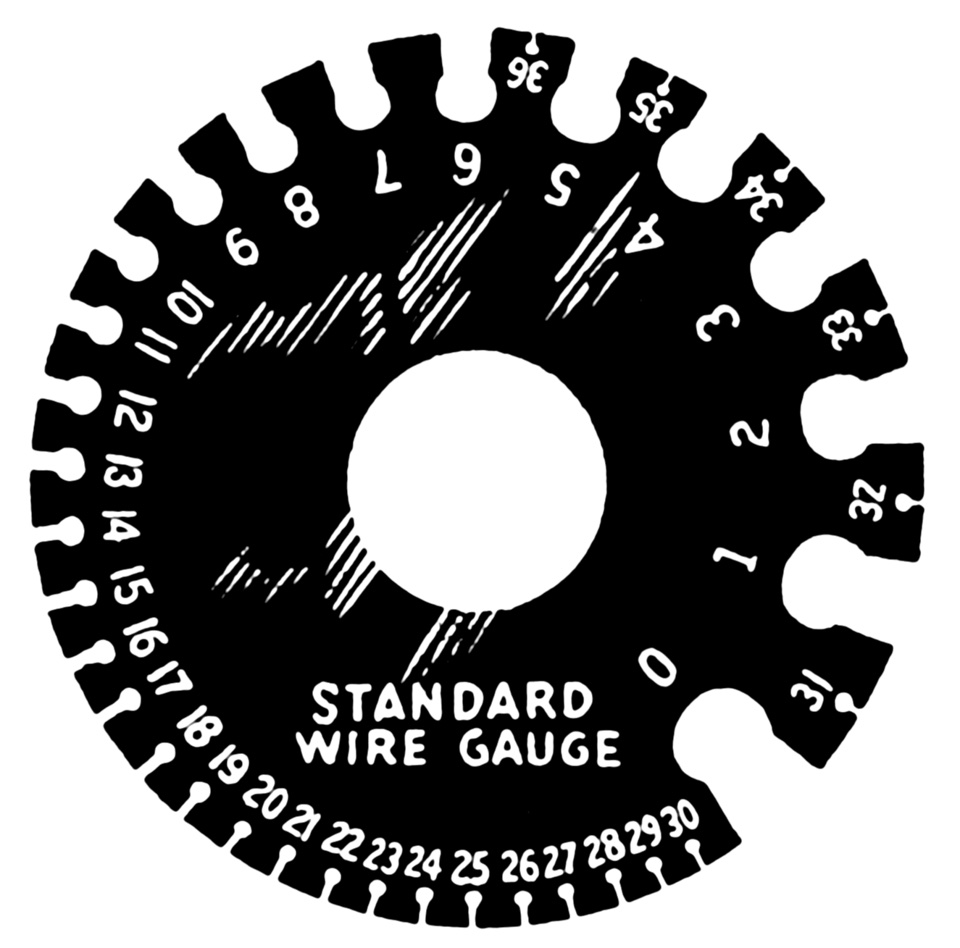
"I've been in the wire business for over 30 years, and I can tell you the single most expensive mistake buyers make: they guess on gauge. "Just give me 14 gauge" might sound reasonable - until your fencing sags, your springs snap, or your medical device fails inspection."
If that sounds familiar, you're not alone. Wire gauge selection isn't just a technical detail - it's the difference between a project that lasts decades and one that fails within months. The good news? Choosing the right gauge isn't complicated. You just need to know what you're looking at.
Let me save you a phone call and walk you through this.
When Guessing Goes Wrong: A Sign Manufacturer's Wake-Up Call
A regional sign manufacturer was producing H-frame sign stakes for municipal contracts using standard 11-gauge wire for the vertical legs. The problem? In high winds (even moderate gusts around 40 mph), the stakes were bending visibly. Clients complained. The manufacturer was losing contracts.
They called us.
Our recommendation was straightforward: upgrade the vertical legs to 9-gauge wire with oil tempering for additional rigidity. The material cost difference? Negligible. The impact? Dramatic. With 9-gauge oil-tempered wire, their H-frame stakes now handle sustained wind loads up to 60 mph without deflection.
That single specification change saved them from losing a $120K municipal contract. More importantly, it saved their reputation.
This is what happens when you match the gauge to the application instead of guessing.
The AWG System Explained: Why Bigger Numbers = Smaller Wire
Let's start with what seems counterintuitive: in the American Wire Gauge (AWG) system, the gauge number and the wire size have an inverse relationship. A higher gauge number means a thinner wire. Lower gauge numbers mean thicker, stronger wire.
14-gauge wire is thinner than 8-gauge wire. This trips up a lot of people.
The AWG system uses a logarithmic formula: each step down in gauge number (from 14 to 13, for example) increases the cross-sectional area by approximately 26%. This means the jump from 10-gauge to 8-gauge represents a significant increase in strength and load-carrying capacity, not a subtle one.
Here's what you need to remember: AWG runs from 0000 (four-aught, the thickest standard commercial wire) down to 28 gauge (the thinnest common size). Western Steel & Wire stocks the full spectrum - if your application requires a specific gauge, we have it.
Complete Wire Gauge Reference Chart: The Money Table
This table covers the gauges you'll use in 90% of real-world applications. Keep this handy when specifying wire for your project.
| Gauge | Diameter (inches) | Diameter (mm) | Common Applications | Load Rating (approx.) |
|---|---|---|---|---|
| 4 AWG | 0.2043" | 5.19 mm | Heavy structural, cable bundling | 200+ lbs |
| 6 AWG | 0.1620" | 4.11 mm | Structural cable, heavy fencing | 150 lbs |
| 8 AWG | 0.1285" | 3.26 mm | High-wind fencing, structural ties | 100 lbs |
| 10 AWG | 0.1019" | 2.59 mm | Standard fencing, spring wire | 70 lbs |
| 12 AWG | 0.0808" | 2.05 mm | General fencing, wire ties, springs | 50 lbs |
| 14 AWG | 0.0641" | 1.63 mm | Light springs, craft wire, ties | 30 lbs |
| 16 AWG | 0.0508" | 1.29 mm | Springs, lockwire, electrical | 20 lbs |
| 18 AWG | 0.0403" | 1.02 mm | Medical device, precision springs | 12 lbs |
| 20 AWG | 0.0320" | 0.81 mm | Fine springs, electronics | 8 lbs |
| 22 AWG | 0.0253" | 0.64 mm | Precision springs, bonsai wire | 5 lbs |
| 24 AWG | 0.0201" | 0.51 mm | Delicate springs, craft wire | 3 lbs |
| 26 AWG | 0.0159" | 0.40 mm | Medical device, ultra-fine wire | 1.5 lbs |
| 28 AWG | 0.0126" | 0.32 mm | Jewelry, precision electronics | 0.5 lbs |
Note: Tensile strength values shown are typical for mild steel. Oil-tempered wire runs 15-25% higher. Musical (spring) wire runs 40-60% higher. Load ratings are conservative estimates - always validate with your actual application requirements.
Match Your Gauge to Your Application - Not Your Gut
Knowing the gauge is one thing. Knowing which gauge to choose is another. Here's how to think about it by application category:
Fencing & Structural
For general farm fencing and field perimeters, 12-gauge is the industrial standard. If the fence will experience high wind loads or you're fencing livestock that will press against it, move to 10-gauge. For permanent boundary fencing in high-wind regions (like our sign manufacturer above), 8-gauge or heavier is your insurance policy. The wire cost difference between 12-gauge and 10-gauge is negligible when spread across a half-mile of fence. Post replacement costs? Astronomical.
Springs & High-Cycle Applications
If your application involves repeated flexing, compression, or tension cycling, you need spring wire or oil-tempered wire, and you need to be conservative with gauge. A 12-gauge plain wire might have a tensile strength of 60,000 psi, but 12-gauge oil-tempered wire rates at 75,000+ psi. For springs, move even more conservative - a 14-gauge spring wire can outperform a 12-gauge plain wire in fatigue life. The material cost difference is offset by eliminating premature failures.
Medical Device & Precision Manufacturing
Medical device manufacturers work under strict ASTM and FDA specifications. Your gauge isn't a preference - it's a requirement. Typically, medical device wire ranges from 18-gauge to 26-gauge, often in stainless steel (304L or 316L). The tolerance window is tight: ±0.001" in many cases. Don't guess. Specify the gauge, the material, the hardness, and the straightness tolerance. We'll deliver exactly what your spec requires.
Automotive & Electrical
Electrical applications have their own gauge standards. A 10-gauge electrical wire, for example, carries 30 amps safely in standard conditions. Go thinner (12-gauge), and you risk voltage drop and overheating. Go heavier (8-gauge) unnecessarily, and you're paying for copper you don't need. For automotive wiring harnesses and spring wire, the gauge is determined by current requirements and mechanical stress, not guessing.
When Standard Gauges Won't Cut It - Custom Wire Sizing
Real-world applications don't always fit the standard AWG lineup perfectly. Sometimes you need something between 12-gauge and 10-gauge. Or you need a specific diameter that isn't a standard gauge number.
We offer custom wire sizes from 0.023" to 0.500" diameter, which covers everything from precision springs to heavy structural elements. Custom gauges typically require a 2-week lead time and a minimum order. But if the standard lineup doesn't solve your problem, custom sizing usually does.
Our straightening and cutting service also handles this custom range. We can deliver wire cut to exact length, straightened to your spec, and ready to integrate into your manufacturing process.
The "I'll Just Go Heavier" Trap (and Why It Costs You)
A very common instinct is to over-specify. "If 12-gauge is good for fencing, I'll just use 8-gauge to be safe." This impulse makes intuitive sense but often backfires.
Here's why:
- Material cost compounds. Moving from 12-gauge to 10-gauge increases cost by roughly 25%. Moving to 8-gauge increases cost by another 40-50% on top of that. Across a mile of fencing or 1,000 units in your manufacturing run, that overage adds up to real money.
- Processing becomes harder. Thicker wire is more difficult to bend, coil, cut, and form. If you're fabricating springs or components, over-gauge means higher labor costs and longer cycle times.
- You're not adding safety, you're adding waste. The correct gauge is the one that handles your load with a realistic safety margin - typically 25-50% depending on the application. Going beyond that doesn't increase safety proportionally; it just increases cost.
- You create a specification you can't reproduce. If you go heavier than necessary and later realize you over-specified, you can't easily swap back. You've now locked yourself into a more expensive baseline.
The right gauge handles your load. Not your fear. Not your worst-case anxiety. Your actual load.
Frequently Asked Questions
How do I convert wire gauge to diameter?
Use the reference chart above. For gauges between standard sizes, the relationship follows a logarithmic formula, but it's easier to reference a complete AWG table (which we've provided). If you need exact diameter in millimeters, multiply the inch measurement by 25.4. For example, 0.1019" × 25.4 = 2.59 mm.
What gauge wire do I need for fencing?
For typical field fencing, 12-gauge is standard. For livestock fencing with high-impact risk or windswept areas, 10-gauge. For permanent boundary fencing or high-wind regions, 8-gauge or heavier. If animals will repeatedly press against the fence (cattle, horses), increase the gauge by one or two sizes.
What's the strongest wire gauge available?
In commercial wire, 0000 gauge (four-aught) is the standard upper limit, about 0.46" in diameter. Beyond that, you're moving into cable or specialized industrial products. For tensile strength within a given gauge, oil-tempered and spring wire significantly outperform plain wire. A 12-gauge spring wire can be stronger in tension and fatigue resistance than a 10-gauge plain wire.
Does wire gauge affect tensile strength?
Not directly. Tensile strength (measured in psi or MPa) is a property of the material and its treatment, not the gauge. However, thicker wire (lower gauge number) carries more total load because it has greater cross-sectional area. A 10-gauge wire might have the same tensile strength as 12-gauge but can carry more total force because there's more material. This is why gauge selection matters: you're matching cross-sectional area to your load requirements.
What gauge does Western Steel & Wire stock?
We stock wire from 4 gauge down to 28 gauge, covering the full range of commercial and specialty applications. This includes plain, oil-tempered, spring, and stainless steel varieties. If a gauge or material isn't in inventory, we can source or produce custom gauges with a 2-week lead time. For current stock and availability, call us directly.
The Bottom Line
Choosing the right wire gauge isn't about perfection. It's about matching the material to your actual requirements - load, environment, cycle life, cost, and manufacturability - with a reasonable safety margin built in.
Here's what we see work consistently:
- Define your load. What force will the wire carry? Static or dynamic? Constant or occasional?
- Know your environment. Will the wire be outdoors, indoors, in corrosive conditions? Does temperature matter?
- Choose the material type. Plain, oil-tempered, spring, stainless - pick the right one for your environment and cycle life requirements.
- Select the gauge. Use the reference chart and application guidance above. Start with the lowest gauge that meets your load, then validate against your cost and manufacturing constraints.
- Validate your choice. If you're unsure, ask. A 10-minute phone call with an expert beats a costly redesign six months into production.
Why Western Steel & Wire for Your Wire Gauge Needs
- We stock wire from 4 gauge down to 28 gauge - if you need it, we've got it. No special order, no 8-week lead time. Immediate delivery on most gauges.
- Custom gauges available with 2-week lead time. If standard gauges don't solve your problem, we can produce custom sizes from 0.023" to 0.500" diameter.
- Our straightening and cutting service handles the full 0.023" to 0.500" diameter range. Wire cut to length, straightened to your spec, ready for your manufacturing process.
- Free gauge consultation - call us and we'll help you spec the right size. Whether it's fencing, springs, medical devices, or something custom, we'll walk through the decision with you.
The sign manufacturer that solved their wind-load problem? They're still one of our best customers. Not because we sold them more wire, but because we helped them solve the right problem with the right gauge.
Contact Western Steel & Wire for your wire gauge needs. Our team is ready to help you choose.

Comments (0)
Leave a Comment