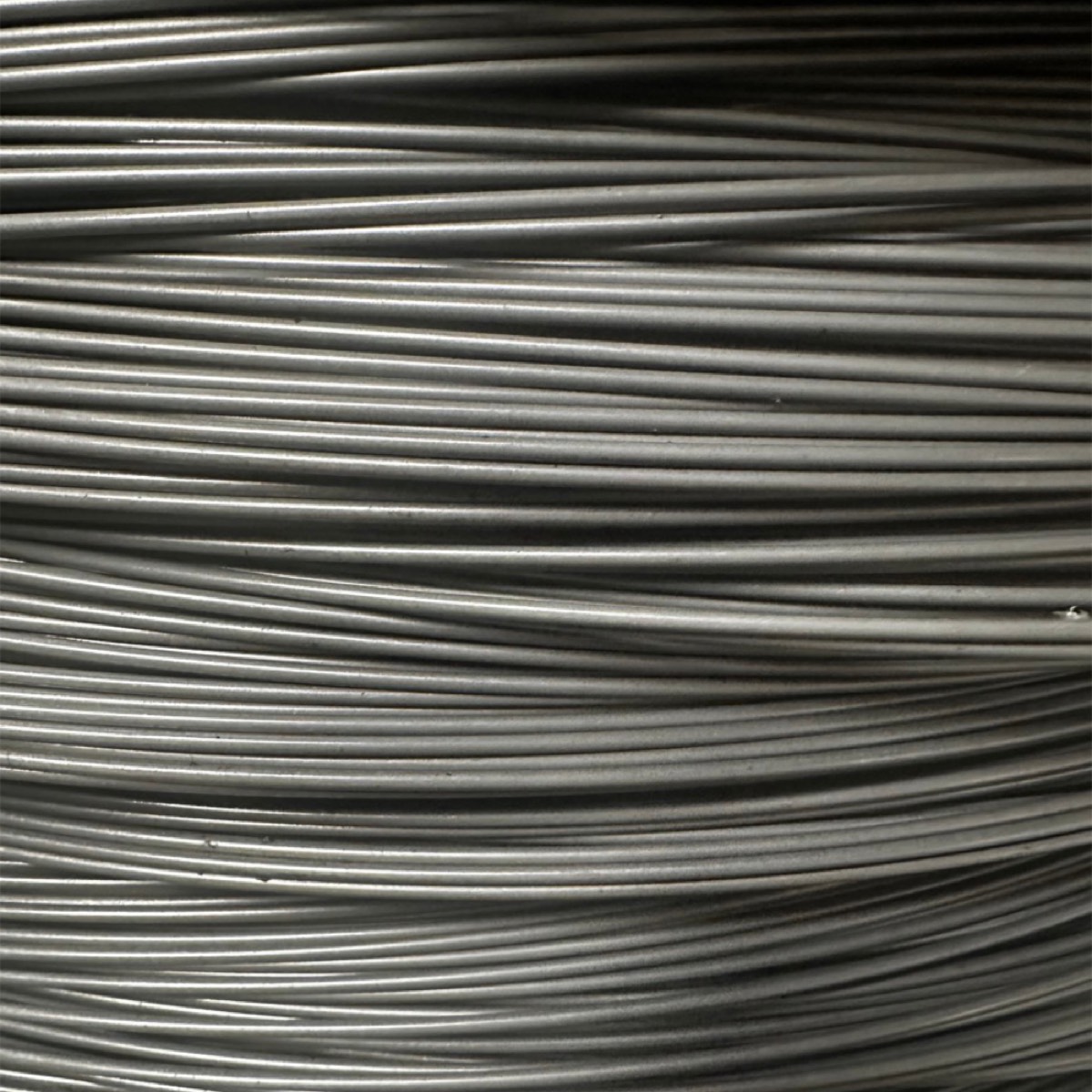
A valve spring that fails at 8 million cycles instead of the required 10 million doesn't just cost you a warranty claim - it costs you the contract. A Tier 2 automotive supplier in Michigan lost a
$3.4 million annual contract because their springs were failing fatigue testing. Root cause: they'd specified ASTM A227 Class II wire where A228 music wire was required. The cost difference? About $0.09 per pound. The revenue difference? $3.4 million.
I've specified wire for springs that cycle 500 million times without a single failure. And I've seen springs fail at 100,000 cycles because someone saved $2,000 by picking the wrong grade. Material selection isn't where you cut corners - it's where you build trust with your customers.
This guide breaks down the three major spring wire standards, how to match wire grade to your application, and why the choice matters far more than most suppliers want to admit. Whether you're a spring manufacturer, an OEM engineer, or a procurement manager, understanding ASTM A227, A228, and A229 is the difference between springs that fail and springs that earn you long-term customer loyalty.
The Big Three Spring Wire Standards - A227, A228, A229
The American Society for Testing and Materials (ASTM) defines three primary grades for spring wire. Each has a distinct metallurgical profile, fatigue resistance, and price point. Understanding which grade solves your problem is the entire game.
| Property | ASTM A227 (Hard Drawn) | ASTM A228 (Music Wire) | ASTM A229 (Oil Tempered) |
|---|---|---|---|
| Carbon Content | 0.60-0.70% | 0.85-0.95% | 0.70-0.80% |
| Tensile Strength | 180-210 ksi | 300-340 ksi | 220-280 ksi |
| Fatigue Life @ 500 MPa | 2-4M cycles | 50-100M cycles | 10-20M cycles |
| Typical Cost Index | $0.38-$0.52/lb | $0.68-$0.92/lb | $0.55-$0.78/lb |
| Best For | Low-cycle applications, garage door springs, industrial door closers | High-cycle automotive, valve springs, precision instruments, medical devices | Medium-cycle, automotive, farm machinery, general industrial springs |
| Temperature Range | −40°F to 250°F | −100°F to 400°F | −50°F to 350°F |
If you're building a spring for low-stress applications where the wire cycles fewer than 5 million times, A227 gets the job done at the lowest cost. But if your spring needs to run for 50 million cycles without degradation - like a valve spring in a high-performance engine - A228 music wire is nearly mandatory. The fatigue performance difference isn't marginal. We're talking 25× to 50× longer service life for the same stress level.
How to Match Wire Grade to Spring Application
The critical variables are three:
stress level, cycle count, and operating temperature.
If you're designing a compression spring that supports 50 pounds of load and cycles 10,000 times per year - maybe a mechanical switch or seat cushion - A227 works fine. Cost per unit: $1.80. Failure risk: very low. You can deploy thousands of units with minimal warranty exposure.
But if you're building a valve spring in a diesel engine that cycles 50 million times per year at high stress, A227 will fail on schedule. You need A228 music wire. Cost per unit: $4.60. Failure risk: near zero. Your customer's engine doesn't fail at 75,000 miles - it runs 300,000. That's the contract protection you buy with the $2.80 material premium.
Here's where most procurement teams make their mistake:
they optimize for purchase price instead of total cost of ownership.
A garage door spring manufacturer we work with learned this the hard way. They'd been buying imported A227 hard-drawn wire at $0.39/lb to save $8,000 annually. But their warranty claims were running at 1.2% - meaning 1 in 83 springs failed within the 10-year product warranty. Replacement labor ran about $65 per warranty claim. At 100,000 units shipped per year, that's 1,200 claims × $65 = $78,000 in warranty costs. They switched to A229 oil tempered (domestically sourced through Western Steel & Wire at $0.68/lb, a $0.29/lb premium). Failure rate dropped to 0.08%. Warranty costs: $520 per year. Net savings: $77,480. Payback on material upgrade: 5.4 days.
That's the math that matters. Not the purchase order price. The lifetime cost.
Fatigue Life, Surface Quality, and Why They're Connected
A227 hard-drawn wire is produced by cold-working the wire, which raises tensile strength but leaves surface stress. When you coil a spring from hard-drawn wire, the coiling process induces additional residual stress in the outer surface of the coil. That's where fatigue cracks initiate. Surface stress acts as a stress concentrator - it's like having a tiny flaw baked into the material.
A228 music wire is manufactured differently. It's drawn to high strength, then the drawing process is precisely controlled to minimize surface defects and relieve surface stress. The result: a cleaner surface with fewer initiation points for fatigue cracks. Music wire can sustain 50× the stress cycles of hard-drawn wire at the same diameter and stress level.
A229 oil tempered sits in the middle. It's drawn to higher strength than A227, then stress-relieved by heat treatment (oil tempering). This removes most of the surface stress from cold-working, giving you better fatigue resistance than A227 but lower fatigue life than A228 music wire. It's the practical choice when you need better reliability than A227 but can't justify the full premium of A228.
The physics matters because it determines your safety factor. If your spring calculation shows a stress of 800 MPa and your wire tensile strength is 1,200 MPa (a 1.5× safety factor), that's tight on A227 where surface defects exist. But on A228 music wire, the cleaner surface means fewer stress concentrators, so that same 1.5× safety factor actually represents lower real-world risk. You're buying certainty.
Compression, Extension, and Torsion - Wire Requirements by Spring Type
Different spring types load the wire differently. That changes your material choice.
Compression springs (springs between two surfaces that are pushed together) experience uniform stress around the coil. A227 or A229 work here for most applications. Fatigue cycles are typically moderate, and stress distribution is relatively even.
Extension springs (springs you pull apart) experience higher stress concentration at the hook attachment points. These hooks create geometric stress concentrators. You need stronger material here. A228 music wire is preferred for any high-cycle extension spring in automotive or industrial applications.
Torsion springs (springs that twist rather than compress or extend) experience the highest stress concentration. The stress is concentrated at the inner radius of the coil where the wire undergoes maximum bending stress. Most torsion springs in automotive and industrial use require A228 music wire or heavy-duty A229 oil tempered. This is where material selection has the biggest impact on reliability.
The $3.4 Million Lesson in Material Selection
Let's return to the Michigan automotive supplier. They manufactured valve springs for a Tier 1 supplier to a major OEM. The spring specifications called for ASTM A228 music wire, 0.115" diameter, Class III finish, shot-peened for enhanced fatigue life.
Their procurement team found an offshore supplier offering ASTM A227 Class II wire at $0.38/lb. A228 music wire was $0.47/lb. "Same grade, different class," the pitch went. $0.09/lb cheaper. On a 50-million-spring annual contract, that's $225,000 in annual savings. Easy decision in a procurement spreadsheet.
They switched suppliers and never notified engineering. Three months in, Tier 1 received field failure reports from engine builds running dynamometer validation testing. The valve springs were failing at 8 million cycles instead of the required 10 million minimum. Not a marginal shortfall - a clear specification breach.
One word: audit. Tier 1 traced the failure to the material specification change. The contract had a performance clause: "Supplier materials must meet ASTM A228 per engineering specification. Substitutions require written approval." The Michigan supplier had violated the contract. Intentionally or not, it didn't matter.
Result: termination. Not a rebid. Not a penalty. Termination for cause. The OEM found a new Tier 1 supplier, the Tier 1 found a new spring manufacturer, and the Michigan supplier lost the entire $3.4 million annual contract.
The attempted savings of $225,000 destroyed $3.4 million in revenue. And that's before you count the cost of retooling, finding new customers, and rebuilding reputation.
Frequently Asked Questions About Spring Wire Selection
What's the best wire for compression springs?
It depends on cycle count. For low-cycle applications (under 1 million cycles), ASTM A227 hard-drawn works fine. For medium-cycle (1-10 million cycles), specify A229 oil tempered. For high-cycle (above 10 million), use A228 music wire.
What's the difference between A227 and A228 wire in terms of reliability?
A227 has lower carbon content and is produced by cold-working. A228 is higher carbon and manufactured with tighter control of surface quality. A228 can sustain 25-50× more stress cycles than A227 at equivalent stresses. For springs cycling above 5 million times, A228 is the more reliable choice.
Can oil tempered wire be used for medical device springs?
Yes, but with requirements. Medical applications demand biocompatibility testing per ISO 13485. Oil tempered wire can be supplied with ASTM A228 specifications certified for medical use. Confirm with your supplier that mill certificates include biocompatibility clearance before specifying for implantable or high-risk devices.
How does wire surface finish affect spring fatigue life?
Surface finish is critical. A rough surface introduces stress concentrators where fatigue cracks initiate. Class I (better surface) wire can sustain 20-30% more fatigue cycles than Class II (rougher surface). If your springs are high-cycle, specify Class I, and consider shot-peening after coiling to further improve fatigue life by 15-40%.
What gauge wire do I need for my spring design?
Wire diameter depends on your load, spring rate, and number of coils - calculate using standard spring design formulas (Hooke's Law, shear stress equations). We recommend working with a spring designer or using software like WinSpring. Once you have your target diameter, we can ensure the exact ASTM grade and surface finish match your performance requirements.
The Bottom Line
Specify the right spring wire grade from the start, or risk warranty claims, contract termination, and customer loss.
Your key takeaways:
- ASTM A227 (hard-drawn) is the budget option for low-cycle springs. It works until it doesn't - around 5 million cycles.
- ASTM A228 (music wire) is the premium choice for high-cycle, high-reliability springs. Fatigue life is 10-50× that of A227.
- ASTM A229 (oil tempered) splits the difference - better fatigue than A227, lower cost than A228.
- Total cost of ownership beats purchase price every time. One warranty claim often costs more than the material premium.
Don't gamble on spring wire. Western Steel & Wire stocks ASTM A227, A228, and A229 in every diameter you need, with full mill certifications and ASTM traceability. We can straighten, cut, and grind wire to your exact tolerances. We're also your engineering partner - if you're unsure which grade your spring design needs, call us.
Visit westernsteelwire.com to spec your wire, or call us directly to talk through your spring design with an engineer who's actually built springs.

Comments (0)
Leave a Comment