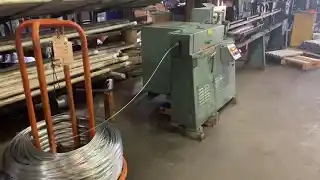
A fastener manufacturer in San Jose was buying pre-cut wire from three different suppliers. Every shipment came in at slightly different lengths - some ±0.030 inches, others ±0.060 inches. Their automatic feeders jammed twice a shift. Downtime cost them $2,400 per day. When they consolidated to Western Steel & Wire's straightening and cutting line, tolerance dropped to ±0.005 inches. The jams stopped. Productivity jumped 22%.
Wire straightening sounds simple. It isn't. The difference between good and great is measured in thousandths of an inch.
What Wire Straightening Actually Involves
When wire leaves a spool or coil, it has memory. The material remembers its shape and wants to stay curved. Raw wire from a mill isn't straight - it's bent into storage coils. When you unwind it, the curve remains. That's where straightening equipment comes in.
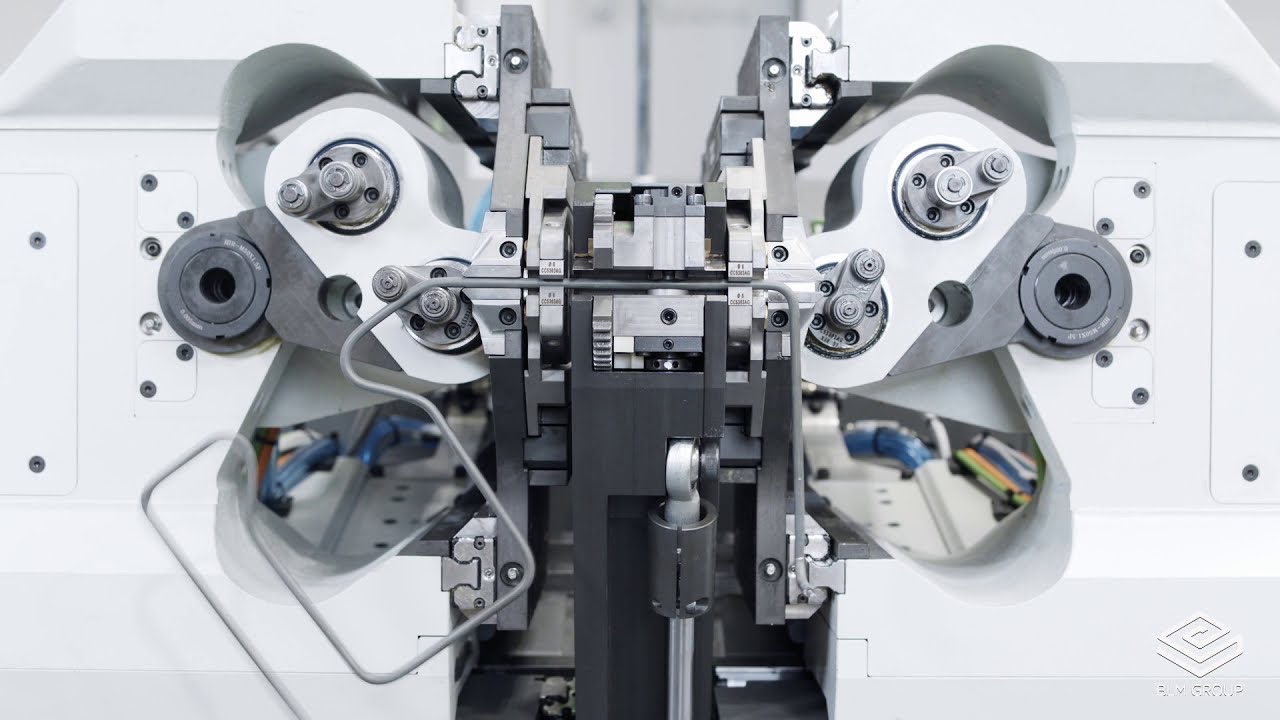
Straightening works by applying controlled, opposing forces to the wire as it passes through a series of rollers or rotary wheels. The wire gets pushed slightly beyond its elastic limit in alternating directions. This relieving process removes the internal stress and memory, leaving the wire straight. Think of it like stress-relief: you're forcing the material to forget its coiled shape.
The key variables: roller spacing, wheel diameter, wire speed, and pressure. Get any of those wrong, and you either don't straighten the wire effectively, or you work-harden the material and make it brittle. Speed matters too - push wire through too fast, and the straightening is incomplete. Too slow, and you bottleneck your production. Finding the sweet spot requires experience and good equipment control.
Modern straightening equipment also includes straightness measurement systems to catch defects before they ship. We run every batch through precision gauges to verify TIR (total indicator runout) and ensure the wire meets spec. TIR is critical in medical and precision applications where straightness tolerance is a hard spec that gets written into customer drawings. A wire can look straight to the eye but still have measurable runout when it spins on a precision mandrel.
Different wire materials require different straightening strategies. Music wire and spring wire are work-hardened and tend to be stiffer coming off the coil - they need more aggressive pressure but lower speed to avoid cracking. Stainless steel has lower modulus and can be straightened faster, though the material tends to slip on straightening wheels, requiring special attention to wheel pressure and coatings. Black annealed and galvanized wire straighten readily since they're softer and more ductile. At Western Steel & Wire, we adjust equipment parameters for each material type to ensure perfect straightness without material degradation.
Our Capabilities - Diameter, Length, and Tolerance Ranges
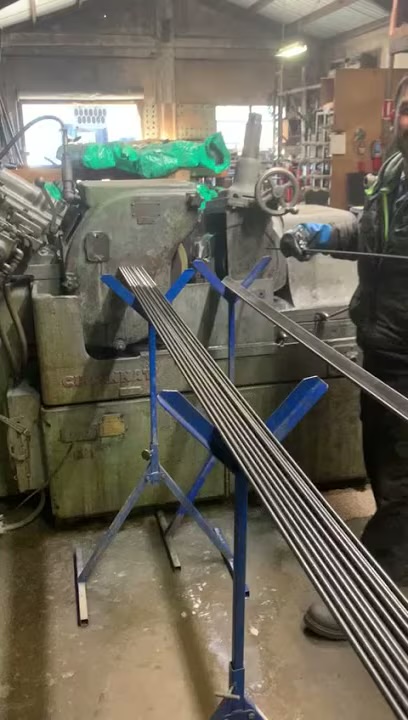
Western Steel & Wire runs a multi-station straightening and cutting line designed to handle the full range of wire types we stock. Here's what we can deliver:
| Parameter | Range | Notes |
|---|---|---|
| Wire Diameter | .023" to .500" OD | All materials: stainless, music, spring, black annealed, galvanized |
| Length Range | 2" to 40 feet | Custom lengths from very short to extended runs |
| Cut Tolerance | ±0.005" standard | Tighter tolerances (±0.002") available on request |
| Straightness (TIR) | ±0.005" to ±0.010" | Medical-grade precision available to 0.002" TIR on centerless-ground wire |
| Materials | All wire types | Carbon, stainless, music, spring, oil tempered, galvanized, copper, aluminum |
| Volume Capacity | 50 lbs. to 5,000+ lbs. | Fast turnarounds - most orders ship within days |
| Processing Methods | Rotary & roller straightening | Can combine with centerless grinding for maximum precision |
Our line operates on a production-ready schedule. Most jobs run within 3-5 business days of order placement. For rush jobs, we can prioritize your wire and deliver within 48 hours. Volume orders - anything over 500 pounds - often run the next day because we batch similar-diameter jobs together on the straightening stations.
The cutting head on our line is CNC-controlled, which means we can set cut length precisely and repeat it perfectly across the entire batch. Manual shears can drift by ±0.015" or more as the operator works through thousands of pieces. Our CNC system locks in the length and maintains it across every single piece. This consistency is what separates quality wire service from commodity supply.
We also offer combined straightening and centerless grinding for applications requiring maximum precision. When you run wire through centerless grinding after straightening, you eliminate surface defects, scale, and micro-irregularities that can affect assembly or cause assembly line issues. For medical device applications, this combined process is often required.
Why Tolerance Matters More Than You Think
Tolerance is where the rubber meets the road. A ±0.030-inch variation sounds small until it's your wire jamming in a feeder or your assembly line sitting idle waiting for better material.
Consider that San Jose fastener customer: they were assembling fasteners on automated equipment. The equipment index-fed wire from a stack. When wire lengths varied by ±0.060 inches, the feeder sometimes grabbed two pieces at once or missed entirely. Result: jam, manual restart, $2,400 per hour downtime. Over a year, that's hundreds of thousands in lost time and lost productivity. The solution wasn't a new feeder - it was wire that was cut consistently, every single piece.
When we cut their wire to ±0.005 inches, the variation disappeared. The feeder worked consistently. No jams. No restarts. Productivity went from 2,100 pieces per shift to 2,560 pieces per shift - a 22% gain. The cost of that precision? Negligible compared to the downtime savings. In fact, the customer recouped the "precision premium" on straightening and cutting within the first two weeks of production.
Here's another example: a medical wire customer in the Bay Area needed 316L stainless wire straightened to 0.002" TIR in 12-inch lengths for catheter mandrels. The tolerance was non-negotiable - FDA required it. We ran the wire through our centerless grinding station first (to eliminate any mill scale or surface defects), then through precision straightening. First-pass incoming yield: 99.8%. No customer rejections. No quarantine holds. One simple reason: the tolerance was built in from the start.
Tolerance also compounds in assembly. If you're cutting 1,000 pieces and tolerance is ±0.030", you could theoretically have pieces ranging from 9.970" to 10.030" - a full 0.060" spread. When those pieces go into an automated assembly machine, that variation creates alignment problems, accelerated wear on guides, and rejected parts due to poor fit. Tighter tolerance eliminates variation drift.
Industries That Depend on Precision-Cut Wire
Different industries have wildly different tolerance requirements. Here's where precision straightening and cutting matter most:
- Medical Devices - Catheter mandrels, stent support wires, guidewires, orthodontic archwires. Tolerance as tight as ±0.002". Zero-defect mindset. FDA regulations require traceability and documented quality control.
- Fastener Assembly - High-speed automated feeding and forming. Variation causes jams and downtime. ±0.005" is standard. Some manufacturers specify ±0.003" for ultra-high-speed lines (2,000+ pieces per hour).
- Spring Manufacturing - Pre-cut wire reduces setup time and scrap. Springs formed from consistently-cut blanks have better fatigue life and more consistent spring constants. Length variation affects spring force consistency.
- Electrical Components - Relay contacts, terminal pins, heating elements. Length precision prevents assembly errors and electrical misalignment. Even tiny variations can affect contact pressure.
- Sign Stakes and Form Pins - Custom lengths reduce field-cutting waste and labor costs. H-frame stakes, S&L forms, layering pins all require exact lengths for proper installation and structural integrity.
- Scaffolding and Construction - Tie wire that's cut to length reduces bundle waste and speeds application on the job site. Consistency across a project improves safety and quality. OSHA requires proper fastening, which starts with correct wire dimensions.
- Agricultural and Trellising Wire - Vineyard and orchard wire cut to exact lengths saves installation time. Consistency prevents sagging or misalignment in training systems. Prevents crop damage and improves yield.
How to Spec Wire Straightening and Cutting
If you're ready to order, here's what we need from you:
- Wire Material - Stainless (which grade? 304 or 316?), music wire, spring wire, black annealed, galvanized, bright basic, copper, aluminum, etc.
- Diameter - Exact OD in inches or thousandths (e.g., .045" or .089"). Tolerance on diameter if critical to your application.
- Cut Length - Exact length. How tight does the tolerance need to be? Standard ±0.005" or tighter? Do you need ±0.002" or ±0.001"?
- Quantity - Pounds or piece count. We handle everything from 50-pound prototype runs to multi-ton bulk orders.
- Application Context - Medical, fastener assembly, springs, construction? This helps us flag any special handling or testing requirements.
- Delivery Timeline - Standard lead time is 3-5 business days. Rush orders available. Volume orders often ship sooner.
- Documentation - Do you need certificates of origin, test reports, or traceability documentation? (Common for medical and aerospace customers.)
Send us a print, drawing, or even a sample piece. We'll review the specs, quote same-day turnaround, and confirm lead time. Most orders ship within 5 business days. For high-volume runs, we can schedule recurring deliveries on a weekly or bi-weekly cycle, which simplifies your inventory management and lowers your carrying costs.
Frequently Asked Questions
What diameter wire can you straighten and cut?
We handle wire from .023" OD to .500" OD. That covers everything from fine medical wire to heavy rebar tie wire and construction fasteners. If your application falls outside that range, contact us - we may have specialty equipment options or can recommend alternative materials.
How tight a tolerance can you hold on cut length?
Our standard production tolerance is ±0.005 inches. We can hold tighter tolerances (±0.002") for applications like medical devices or precision fasteners. For ultra-precision work (±0.001"), combined with centerless grinding, special setup fees apply but the results are phenomenal.
What's the difference between rotary and roller straightening?
Rotary straightening uses rollers arranged in a spiral path to apply corrective pressure - best for longer pieces and consistent-diameter wire. Roller straightening is a linear pass through staggered rollers. We use both methods depending on wire type, diameter, and length. For maximum precision on medical and aerospace wire, we combine straightening with centerless grinding for surface quality.
Can you straighten and cut stainless steel, music wire, and spring wire?
Yes. All materials we stock can be straightened and cut to spec. Stainless requires no special handling. Music and spring wire need careful speed control to avoid work-hardening and cracking - we adjust equipment parameters for each material. Black annealed and galvanized wire straighten readily since they're softer and more ductile.
What's the minimum order for custom-cut wire?
We'll quote orders from 50 pounds up. Rush orders can ship within 48 hours. Volume pricing available on larger runs (500+ lbs). Call us with your print and delivery timeline, and we'll get you a quote same day. For recurring orders, we can set up a standing weekly or bi-weekly shipment.
The Bottom Line
Wire straightening and cutting isn't a commodity service. It's a precision operation that directly impacts your downstream costs - labor, scrap, downtime, and quality. The difference between ±0.030" tolerance and ±0.005" is the difference between downtime that costs thousands per shift and zero-jam production.
Western Steel & Wire straightens and cuts wire from .023" to .500" diameter, in lengths from 2 inches to 40 feet, in every material we stock. Tolerances to ±0.005" standard, with tighter tolerances available for medical and aerospace applications. Fast turnarounds - most orders ship within days. Competitive pricing that reflects the precision you're getting.
Stop paying for wire that doesn't meet spec. Visit westernsteelwire.com or call us with your print - we'll quote same day and get you straightened, cut wire you can count on.
Comments (0)
Leave a Comment