A medical device company was outsourcing wire forms to three different shops - each with its own tolerances, lead times, and quality issues. One batch of catheter guide frames came in 0.008 inches out of spec. The entire lot - 12,000 pieces - had to be scrapped.
Cost: $156,000 in materials plus a 6-week delay that nearly killed a product launch.
That's when they called Western Steel & Wire.
What CNC Wire Bending Can Do - And What It Cannot
CNC wire bending is not magic. But it is closer than you would think. The technology exists to deliver precision, speed, and consistency that manual bending shops simply cannot match.
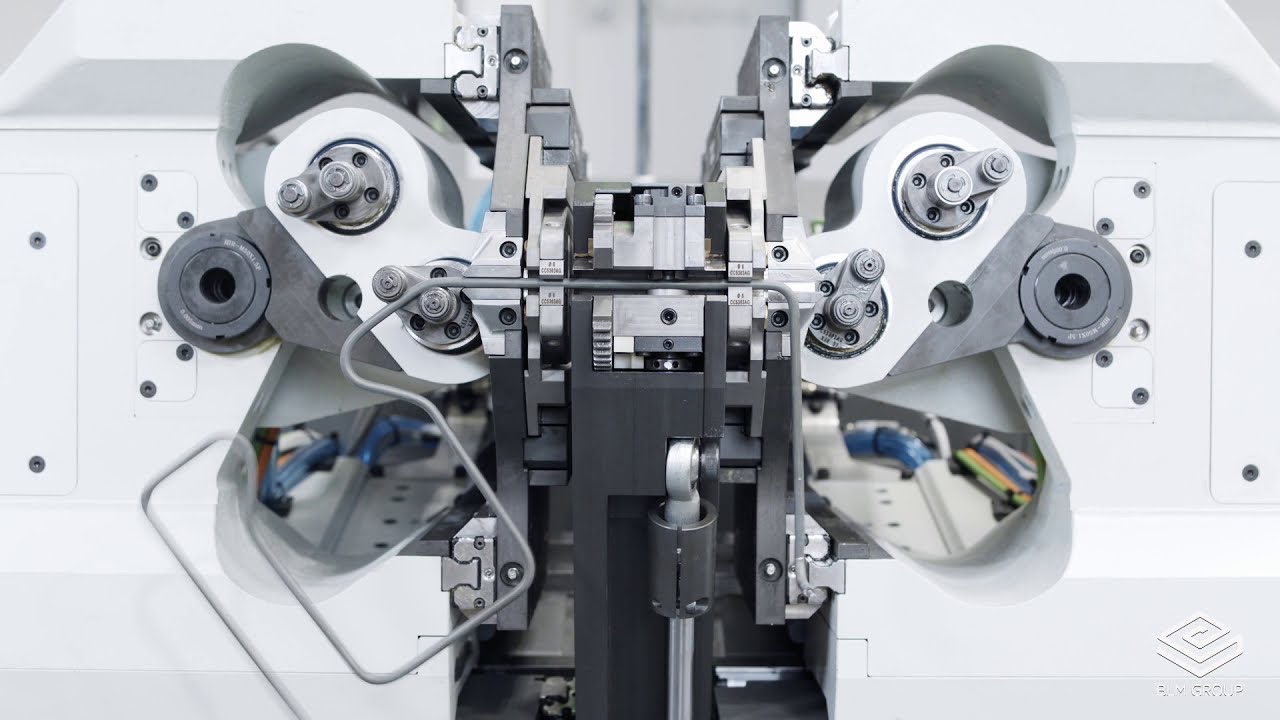
If you can draw it - whether that is a 2D drawing, a 3D CAD model, or a sketch on a napkin with dimensions - we can bend it. And we can bend it with precision that makes traditional manual bending look like a science fair project. The difference between CNC bending and manual bending is the difference between a CNC lathe and a hand file. One is repeatable. One is not.
Here is the deal: CNC wire bending machines read your specifications and execute the same bend, angle, and radius on every single piece. No human interpretation. No "close enough." Every bend matches. This is game-changing for companies that need consistency at scale. Whether you are manufacturing 10 pieces or 100,000 pieces, the variation between the first piece and the last piece is typically less than 0.003 inches. That kind of consistency does not happen by hand.
What CNC bending excels at:
- Multi-step bends with precision. Complex angles that would require multiple manual setups, fixture changes, and operator skill can be executed in a single machine pass.
- Tight tolerances - ±0.002" to ±0.005" depending on material and diameter. We have delivered tighter tolerances (±0.001") on smaller diameters.
- High-volume production runs where consistency directly impacts your cost structure. Manual bending requires rework, inspection, and sorting.
- Prototyping and design validation before committing to full production. We can run design iterations at low cost because there is no tooling investment.
- Quick tool changes and reprogramming - we can run 14 different bend configurations without stopping the machine. What takes a manual shop 8 hours of setup time takes us 15 minutes.
What CNC bending has limits on:
- Wire diameter larger than 0.500 inches becomes physically challenging (we can do it, but your lead time grows and costs increase). The force required to bend heavy wire increases geometrically, requiring specialized fixtures.
- Extremely brittle materials like some ultra-hard tempers may crack if bent too tightly without annealing first. A material like music wire in full hard temper has a minimum bend radius that cannot be violated without material fracture.
- Minimum bend radius varies significantly by material - 304 stainless can handle tighter bends than music wire of the same diameter. Oil-tempered wire is more forgiving than spring wire. Our engineers understand these limits.
Tolerances, Materials, and Wire Diameter Ranges
Here is what our CNC bending capability looks like in concrete numbers. This table represents what we reliably deliver across hundreds of projects per year:
| Parameter | Capability | Notes |
|---|---|---|
| Wire Diameter Range | .023" to .500" | Larger diameters possible with extended lead time and custom fixtures |
| Materials | All standard types | Stainless (304/316), Music, Spring, Black Annealed, Galvanized, Copper, Aluminum, Bright Basic, and specialty alloys |
| Standard Tolerance | ±0.002" to ±0.005" | Tighter tolerances achievable on smaller diameters and annealed materials |
| Minimum Bend Radius | 1.0x to 4.0x diameter | Material-dependent; annealed materials more forgiving; hard tempers require larger radii |
| Max Bent Length | Up to 24" | Longer forms available via specialized fixtures and multi-station operations |
| Production Volume | Prototypes to 100k+ units | Single-piece prototypes 1-2 days; production 2-6 weeks depending on complexity |
| Lead Time from Drawing | 2-5 business days | Faster turnarounds for standard geometries; same-week quotes on all requests |
Common CNC Wire Bending Applications by Industry
Medical Devices
Catheter guide frames, stent delivery systems, orthodontic archwires, surgical instrument guides, and guidewire components for minimally invasive procedures. Stainless steel (304/316) is the material of choice here due to biocompatibility and corrosion resistance. Tolerances must be tight because a 0.005" deviation can affect how a device moves through delicate anatomy. Western Steel & Wire has bent medical-grade wire forms that passed ISO 13485 validation audits for companies like Johnson Matthey and Confluent Medical. These applications demand repeatability that only CNC machines can deliver consistently.
HVAC & Mechanical
Insulation support clips, ductwork bracing, equipment frame components, and vibration isolation brackets. One HVAC manufacturer needed 14 different support clip geometries for different equipment sizes. Instead of buying 14 different tools or running 14 separate manual operations, we programmed one CNC machine to switch between profiles. Changeover time dropped from 45 minutes per configuration to 8 minutes. That is 72% faster, which translates directly to lower per-unit costs. Speed matters in high-volume manufacturing.
Automotive & Fastening
Spring forms, suspension clips, wiring harness supports, and seat frame components. Music wire and oil-tempered wire are common here - both materials that benefit enormously from CNC precision to achieve consistent spring rates. Variation in bend radius of just 0.003" can change the spring force by 8-12%, which is unacceptable in automotive applications.
Agricultural Equipment
Bale ejector arms, cage components, gate hinges, and hay conveyor frames. Galvanized wire is typical here for outdoor corrosion resistance. Bending precision here is less about micro-tolerances and more about geometric consistency - no two ejector arms should feel different when they operate, and wear patterns should be uniform across a batch of 10,000 units.
Prototyping to Production: How We Get From Your Drawing to Your Parts
Here is the workflow when you bring us a wire bending project. This process is optimized for speed without sacrificing quality. We have streamlined this over decades of manufacturing:
- You send us a drawing (2D DWG, 3D STEP, PDF, or even a napkin sketch - we take them all). Include your material preference, wire diameter, and any tolerance requirements.
- We review it for material compatibility, bend radius feasibility, and tolerance achievability. If we see an issue, we call you immediately.
- Our engineers program the CNC machine - this is usually same-day for standard geometries. Complex multi-step bends take longer, but rarely more than 24 hours.
- We run a prototype sample and send you photos or the actual piece for validation. You approve, request changes, or sign off.
- Once approved, we scale to production. No tool cost. No retooling delays. No expensive fixture changes. Just consistent output, shift after shift.
The entire cycle from drawing to first production piece typically takes 2-5 business days. For companies used to 6-8 week lead times from overseas shops, this is transformative.
The $156,000 Lesson in Vendor Consolidation
Back to the medical device company from the opening. They were working with three separate vendors:
- Vendor A sourced the 304 stainless wire from Korea.
- Vendor B in Ohio straightened, cut, and cleaned it to length.
- Vendor C in Massachusetts bent it into catheter guide frames.
Communication broke down between Vendor B and Vendor C. The wire spec sheet said 0.025" diameter, but Vendor B shipped 0.033" diameter - an error they claimed was within "reasonable manufacturing tolerance." Vendor C bent it anyway because they did not cross-check the incoming diameter. They did not catch the deviation until the finished parts failed dimensional inspection by 0.008 inches.
$156,000 scrapped. 6-week delay while Vendor B sourced replacement wire and Vendor C re-bent 12,000 pieces.
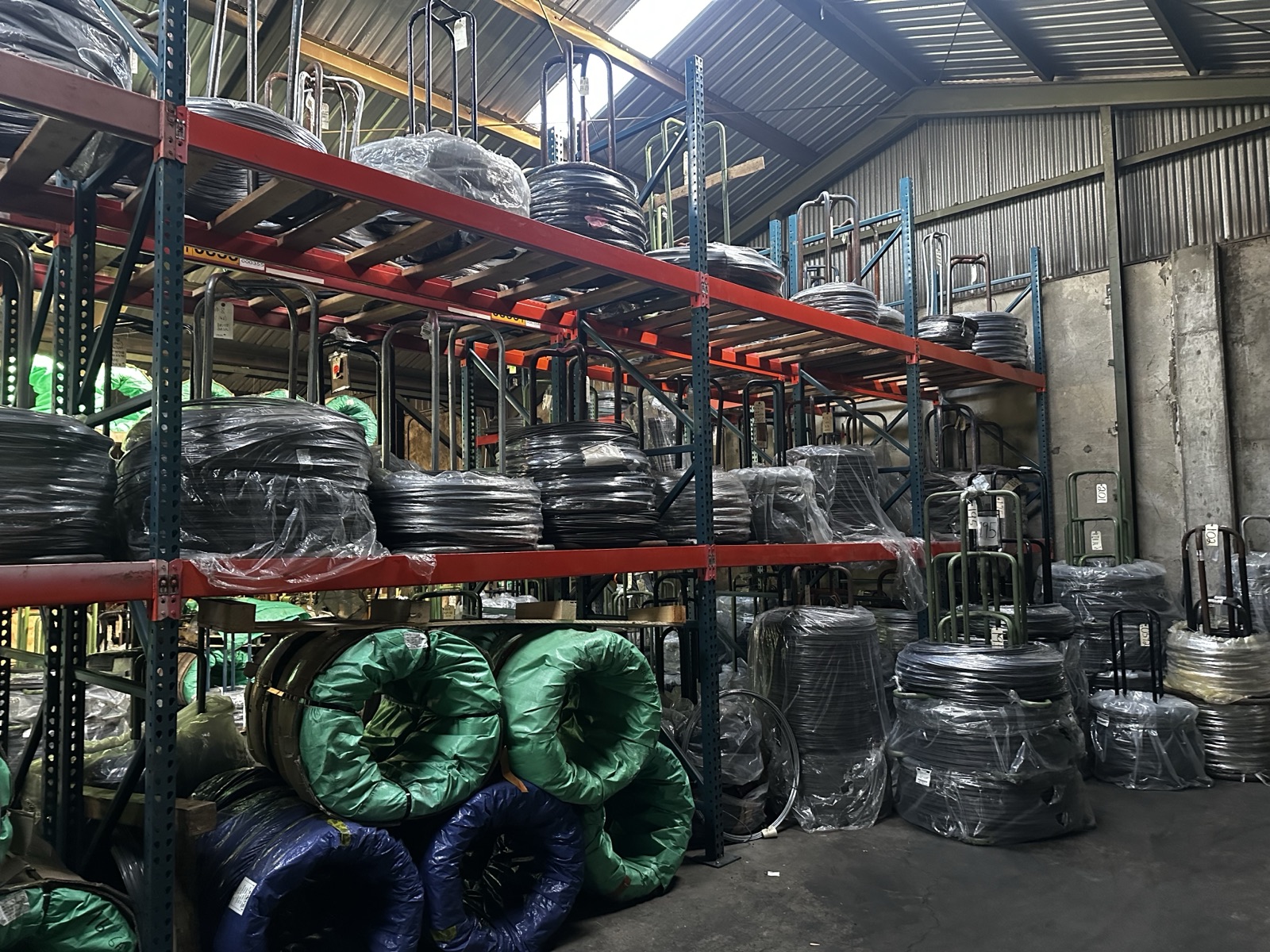
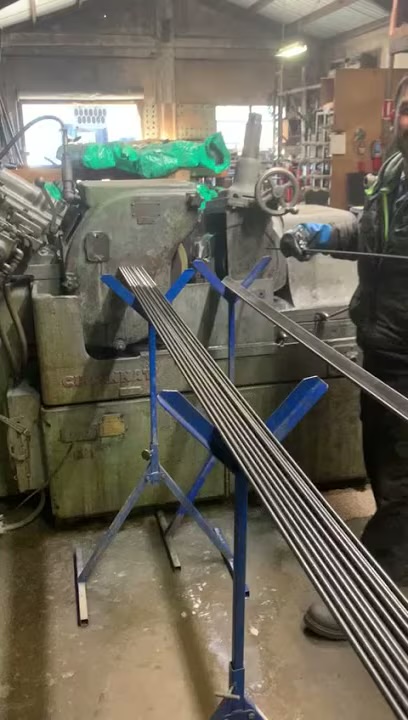
We consolidated everything. Western Steel & Wire now sources the 304 stainless wire directly from a trusted supplier we vet, straightens it to ±0.001" diameter tolerance, cuts it to precise 18.5" lengths, and CNC bends it to ±0.002" all in-house. Single vendor. Single quality standard. Single point of accountability. Every piece is inspected and dimensioned.
"They went from 8-week lead times to 2 weeks," the company's procurement director told us. "More importantly, we went from three different quality standards to one. One conversation. One invoice. One problem solved. And if there is ever an issue, I know exactly who to call." That is the power of vendor consolidation and integrated manufacturing.
FAQ: CNC Wire Bending
What tolerances can CNC wire bending achieve?
Standard tolerance is ±0.002" to ±0.005" on bend angles and positions, depending on wire diameter and material. Tighter tolerances are possible on smaller diameters and softer materials - we have delivered ±0.001" on 0.032" stainless wire. Harder materials require looser tolerances due to spring-back effects. Ask about your specific requirements and we will validate feasibility on a prototype.
What materials can be CNC bent?
All of them - stainless (304/316), music wire, spring wire, black annealed, galvanized, aluminum, copper, bright basic, and specialized alloys like Nitinol or Kovar. Material hardness affects minimum bend radius and lead time, but we can bend virtually any wire type. We have material engineers on staff who understand the metallurgical implications of different bend radii.
How much does custom wire bending cost?
Pricing depends on wire material, diameter, complexity of the bend pattern, and production volume. A single prototype might cost $40 - $150. A production run of 10,000 units typically ranges $0.12 - $0.45 per piece depending on geometry and material. We do not charge setup fees or tooling costs, so your unit cost does not decrease at higher volumes due to amortization - it decreases due to machine efficiency. Send us your drawing for a firm quote - same-week response guaranteed.
What is the minimum order for CNC wire forms?
No minimum. We can bend one piece for a prototype or 100,000 for production. Lead times are obviously faster on prototypes (1-2 days), but we do not have setup fees or tooling costs that punish small orders. A startup can validate a concept with 10 pieces without any penalty.
How long does CNC wire bending take from order to delivery?
Prototype (1-10 pieces): 2-5 business days including design review and sample approval. Production run (1,000-100,000): 2-6 weeks depending on complexity, volume, and our current capacity utilization. We guarantee a same-week quote on every request, and we often beat our own timelines.
The Bottom Line
CNC wire bending solves a specific, expensive problem: you need custom wire forms at precision tolerances, and you cannot afford the delays and quality risks of splitting the work across multiple vendors. Every vendor adds hand-offs, communication gaps, and opportunities for specification creep. Those gaps cost money.
At Western Steel & Wire, we source the raw material, straighten it, cut it, and CNC bend it - all under one roof, all to the same quality standards, all on one timeline. No hand-offs. No tolerance gaps. No excuses. Every piece comes off the machine exactly like the one before it, with full traceability and documentation. This is how you eliminate the $156,000 disasters.
We have been doing this for over 90 years. We understand manufacturing. We understand wire. We understand the precision and consistency that real engineering demands.
Stop splitting your wire and bending across multiple vendors.
Visitwesternsteelwire.comor send us your drawing for a same-week quote. We will show you what precision looks like.
Comments (0)
Leave a Comment