In 2024, scaffolding failures killed 60 workers and seriously injured over 4,500 in the United States alone. OSHA lists scaffolding as the #3 most-cited violation in construction — every single year. And here's what most people don't realize: a significant percentage of those failures trace back to the simplest, cheapest component on the scaffold: the tie wire.
You're tying scaffolding at a high-rise, or you're a scaffold contractor managing crews across three job sites, and the wire keeps breaking mid-tie. Or worse — it bends in a way that creates unsafe tension points nobody caught during pre-job inspection. That's not laziness. It's not your crew. It's bad wire, and it costs money, time, and lives.
In this guide, we'll walk through exactly what scaffolding tie wire needs to do, which materials and gauges protect your crew, what OSHA actually requires, and how to spot the difference between tie wire that will get you through a job safely and tie wire that will get you a citation.
The Role of Tie Wire in Scaffold Safety — Why It's Not "Just Wire"
Tie wire looks simple. It's just wire you wrap around scaffold components to hold them in place. But it's doing sophisticated structural work. Every tie carries tension, handles vibration from crew movement, and manages micro-loads that add up across dozens of connections per scaffold level.
A scaffolding tie wire from a quality mill maintains consistent tensile strength across every coil. It bends cleanly without work-hardening. It holds its shape under repeated wrapping and tensioning. A cheap import wire — sometimes made from rebaked scrap steel — work-hardens after two or three bends, becomes brittle, and snaps when your ironworker tightens the tie.
OSHA Requirements
29 CFR 1926.451(c): The OSHA scaffold regulation does not call out a specific wire gauge for scaffold tie-ins. The regulation does require that scaffolds be properly guyed, tied, or braced to prevent tipping and installed according to manufacturer recommendations or engineering requirements. In addition, these ties must be designed by a qualified person based on load, height, wind exposure and scaffold type.
Key OSHA requirements include:
- Supported scaffolds with a height-to-base ratio over 4:1 must be restrained from tipping by ties, guys or braces.
- Vertical ties are required every 20 ft for narrow scaffolds (3 ft wide or less) and 26 ft for wider scaffolds, and horizontal intervals not over 30 ft.
OSHA's 2010 interpretation allows:
- #9-gauge steel wire
- Minimum 40 ksi tensile strength
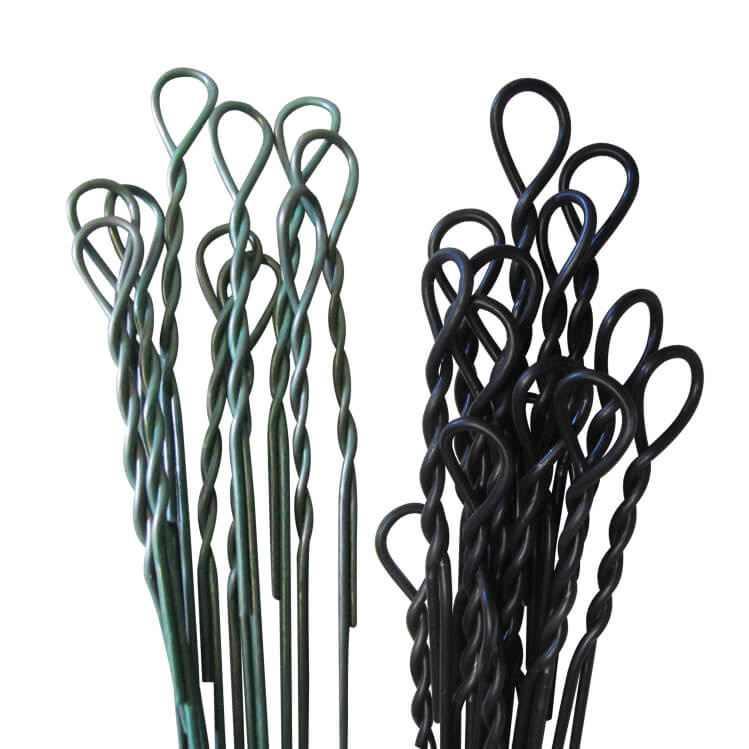
- Double-wrapped / U-loop
- Minimum 5 twists at the anchor point
- No tarps/plastic creating extra wind load unless engineered appropriately
29 CFR 1926.500 (Scaffolds): "All components of the scaffold shall be designed and constructed to support their own weight plus a load of 4 times the maximum intended load." Your tie wire is a component and must support its design load without deformation or failure. OSHA inspectors specifically check tie wire during walkarounds.
29 CFR 1926.501 (Duty to Fall Protection): Scaffold failure is a leading cause of falls. Tie wire integrity is part of scaffold structural integrity. Failure to use appropriate-grade wire can be cited as a violation.
Wire Types for Scaffolding: Black Annealed, Galvanized, and Stainless
Not all wire is the same. Three types dominate scaffolding, and each has trade-offs and specific use cases:
| Wire Type | Gauge Range | Best For |
|---|---|---|
| Black Annealed | 9 – 12 GA | General scaffolding; cost-effective; field-proven durability; rebar tying |
| Galvanized | 9 – 12 GA | Outdoor/coastal projects; rust resistance; extended weather exposure; marine environments |
| Stainless Steel | 9 – 12 GA | Food processing facilities; pharmaceutical plants; corrosive environments; sterile settings |
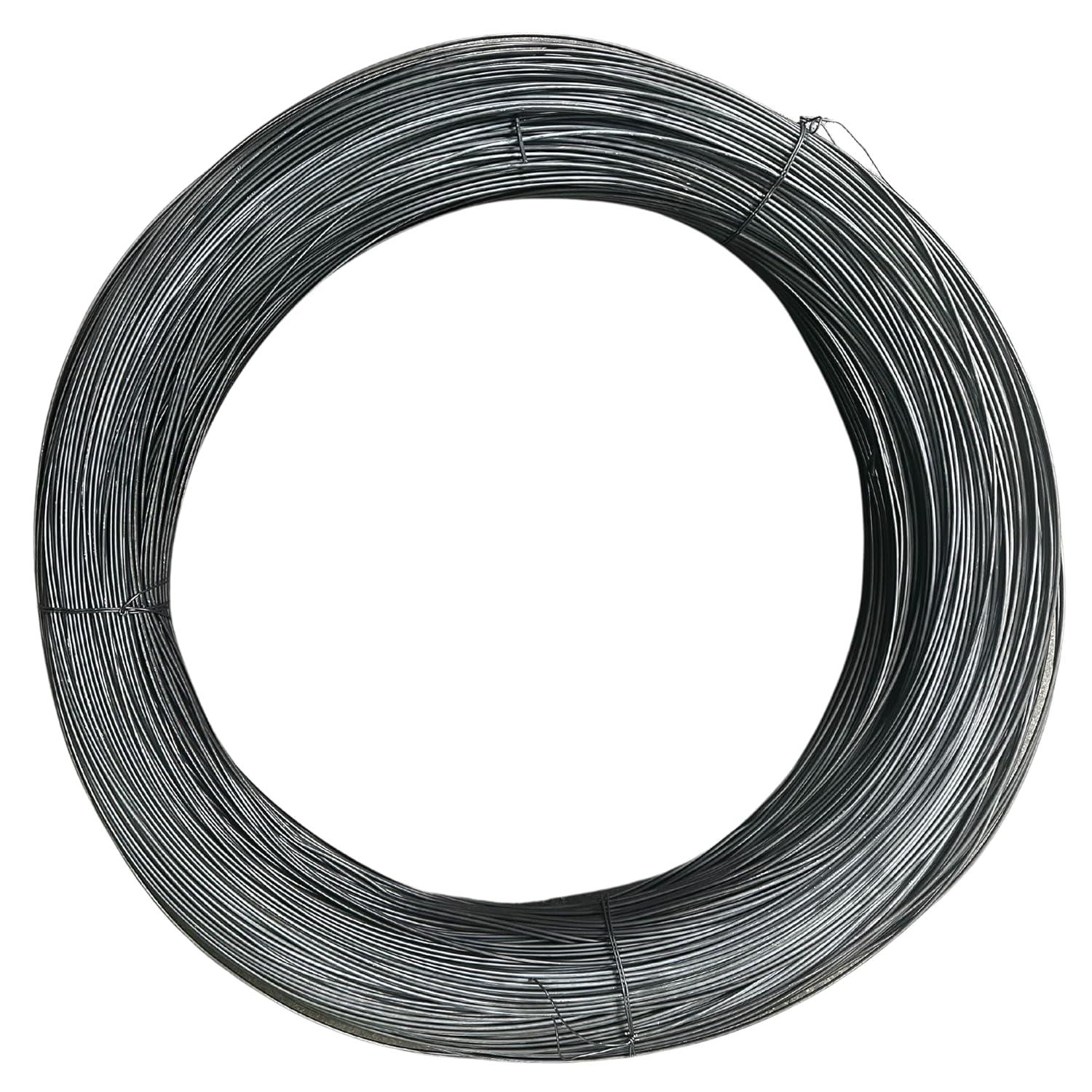
Black annealed wire is the standard in Northern California scaffolding. It's affordable, proven in the field, and performs reliably when sourced from a reputable mill. The annealing process (heating and cooling) relieves internal stress, so the wire bends clean and doesn't snap. This is why rebar crews and scaffold contractors across the Bay Area prefer it — consistency across batches, predictable tensile behavior, and a 90-year track record.
Galvanized wire costs 15–25% more than black annealed but offers rust protection if your project is near the coast or exposed to salt spray. A galvanized coating is about 2–3 mils thick and extends tie wire life significantly in marine environments, humid climates, or any project lasting more than 6 months. If you're in the San Francisco Bay or working on a coastal high-rise, galvanized should be your default.
Stainless steel is rare in general scaffolding (cost is 3–4x black annealed) but required in food plants, pharmaceutical facilities, and other corrosive-environment work where steel oxidation can contaminate the product or environment. 304 and 316 stainless are both acceptable; 316 is preferred for saltwater or chemical exposure.
Scaffolding Wire Gauges
Although OSHA interpretation letters and industry practice commonly reference #9 gauge steel wire for scaffold tie-ins, this is not to say that only #9 is used. At Western Steel & Wire (WSW), we commonly see #9 through #12 used by major name-brand scaffolding companies and, almost always, Black Annealed in 100 lb coils.
At WSW, we certify that all black annealed scaffolding wire, gauges #9 thru #12, have approximately the same tensile strength; all gauges are ≥ 40 ksi (OSHA std) and all are commonly from the same wire rod, only drawn to a different diameter. When drawing wire, I like to think of my childhood when we used the Play-Doh Fun Factory. Same material, just a different size of die.
Western Steel & Wire — Only Known Source for Premium BOF, Clean Scaffolding Wire
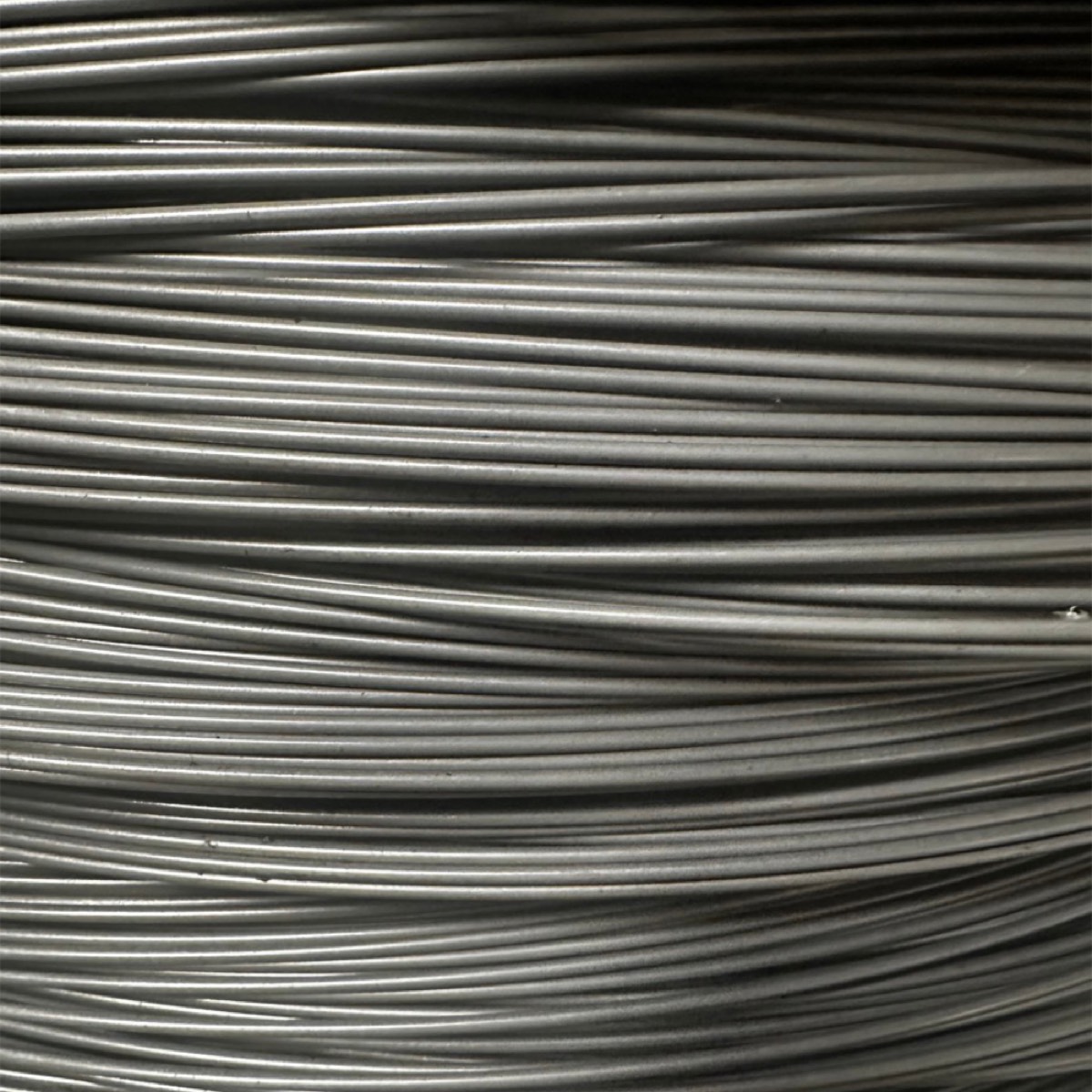
WSW only specifies Basic Oxygen Furnace (BOF) steelmaking for its scaffolding tie wire. BOF steelmaking is pure, with minimal impurities for excellent molecular bonding, excellent bendability and resistance to breakage vs. wire made from EAF steelmaking. EAF is made from 100% scrap metal with large amounts of impurities, resulting in poor molecular bonding, causing higher potential for breakage and noticeably harder bending. Almost all scaffolding wire produced in US and China is from EAF steelmaking.
In addition, at WSW, we also specify clean and dry, no oil, so nothing comes off on your hands. See the video.
To the best of our knowledge, WSW is the only source for this premium BOF, clean & dry scaffolding wire.
Western Steel supplies scaffolding contractors across the country because we understand this. Every coil of tie wire we sell is ASTM-certified for tensile strength, has full traceability, and performs the same way on the 5th wrap as it does on the 500th. Our inventory includes 100 lb coils of #9 through #12 Black Annealed.
Recommended Material Standards: ASTM A227 (Piano Wire / Music Wire) or ASTM A228 (Spring Steel Wire) for engineered tie work. ASTM A82 (Wire for Concrete Reinforcement) also acceptable for black annealed. Always demand mill certifications.
The practical take: when you source tie wire from a mill with full ASTM certification and traceability — as Western Steel & Wire does — you've satisfied OSHA's material requirement. You can defend your compliance in an inspection. We provide documentation with every coil: mill name, heat number, tensile test results, and delivery date.
Sketchy imports without certification paperwork? That's a citation waiting to happen. OSHA inspectors check tie wire during surprise inspections, and they look for proof of material certification. If you can't produce it, you're vulnerable.
The Real-World Difference Between Good Wire and Bad Wire
Numbers on a spec sheet matter, but here's what your crew sees in the field:
A Bay Area scaffold contractor was using a generic tie wire from an online supplier — cheap, bulk pricing, seemed fine. But tying speed was dropping. His crew was breaking wire 15–20 times per day during ties. Frustration, lost time, safety concerns. He switched to Western Steel & Wire's 10-gauge black annealed wire. Result: tying speed increased 18%, breakage dropped to nearly zero. Over a year, the time savings paid for a better wire brand 5 times over. His foreman said: "We used to lose wire mid-tie because it was too brittle. Western Steel & Wire's annealed wire bends clean every time."
A regional scaffold company experienced a near-miss incident when imported tie wire snapped during a live tie-off on a 15-story frame. No one was hurt — luck, not engineering. The crew was investigating the cause when they discovered the wire had internal defects (redrawn scrap, non-uniform composition) due to EAF steelmaking, that weren't visible before tensioning. They immediately sourced all tie wire from Western Steel with full mill traceability, BOF steelmaking and ASTM documentation. OSHA never issued a citation because the tie wire sourcing was documented and defensible.
The lesson: Quality Western Steel & Wire tie wire costs maybe 5–8% more per pound than bulk imports, but you get consistency, crew confidence, and defensible OSHA compliance. That's not an expense — it's risk management. When your competitor is sourcing from unknown mills and getting citations, you're binding up scaffold with documentation and peace of mind.
Frequently Asked Questions
What gauge wire is used for scaffolding?
9–12-gauge Black Annealed wire (ASTM A82 or A227 certified) from Western Steel & Wire is standard for most scaffolding tying. It offers the best balance of strength, crew handling, and cost. It bends cleanly, maintains tensile strength through repeated wrapping, and costs less than galvanized or stainless. Galvanized is preferred for coastal/outdoor work; stainless for food/pharma facilities. Consult your project engineer or scaffold spec if heavier loads (< 9 gauge) or lighter tie work (18-gauge) is required. When in doubt, go up a gauge number (thicker).
Does OSHA specify scaffolding tie wire requirements?
OSHA doesn't dictate brand or exact gauge, but 29 CFR 1926.500 requires all scaffold components (including tie wire) to support 4 times the maximum intended load without failure. Material certification and traceability are the proof. Buy from mills with ASTM compliance documentation and maintain records.
How many ties per scaffolding connection?
Standard practice is 1–2 complete wraps per connection (6–8 double loops total, depending on component diameter). Each wrap should be tight enough that you can't rotate the wire with fingers, but not so tight that you stress the wire beyond its working limit. Crew experience and your scaffold manufacturer's spec guide the standard.
Can galvanized wire be used for scaffolding?
Yes. Galvanized wire meets ASTM requirements and offers rust protection. Cost is 15–25% higher than black annealed, so it's recommended for coastal projects, long-duration sites, or repeat-use scaffolding systems. Stainless is overkill for most general construction and carries premium pricing.
The Bottom Line
Scaffolding is critical infrastructure. Your crew depends on it. Your client depends on it. OSHA audits it. And it all comes down to wire that bends cleanly, holds its strength, and doesn't snap mid-tie.
Black annealed tie wire, #9 thru #12 gauge from a certified mill, is the standard for a reason: it works. Not because it's fancy or expensive, but because it's reliable, field-proven, and defensible under inspection. The extra cost per pound is insurance against lost productivity, safety incidents, and citations.
When you source from Western Steel & Wire, you're not just buying wire — you're buying traceability, ASTM certification, and 90+ years of supply chain expertise. Your crew gets wire that performs the same way on the first tie as the 300th. And if an OSHA inspector ever asks "where did this wire come from?" you have documentation. That matters.

Comments (0)
Leave a Comment