A meat processing plant in California's Central Valley got a call from the FDA that every food manufacturer dreads. Their conveyor belt wire mesh was shedding microscopic metal fragments into product. The recall covered 2.2 million pounds of ground beef. Cost: $4.1 million in destroyed product, $1.8 million in legal fees, and a brand reputation that took three years to rebuild. The root cause? They'd installed 304 stainless mesh in a high-chloride washdown environment where 316 was required.
In food processing, the wrong wire isn't just a maintenance problem - it's a public health risk.
Every day, wire mesh screens, conveyor system components, and specialized wire forms move through food and beverage facilities across North America. They filter hops in breweries. They support product on processing lines. They contain ingredients during mixing and coating. Most operators assume the stainless steel wire they've ordered is food-safe. Most of them are wrong.
This guide covers the stainless steel wire grades, surface finishes, and compliance standards that separate food-safe wire from the kind that shows up in recall notices. We'll walk through the regulatory landscape, the metallurgical reasons why 316 beats 304 in food environments, and real-world application specs you need to lock down before you place an order.
Why 316 Stainless Is the Standard for Food Contact (Not 304)
Both 304 and 316 stainless are chromium-nickel alloys. Both resist most corrosion in neutral environments. The difference shows up fast in food processing, where chloride exposure is constant.
304 stainless contains approximately 18% chromium and 8% nickel. It performs well in many industrial settings. But in food processing - where washdown protocols use chloride-based sanitizers, where brined products and salt spray are routine, where steam and moisture create a corrosive kitchen environment - 304 starts to pit. Pitting corrosion is localized, aggressive, and nearly invisible until the wire fails.
316 stainless adds molybdenum (2-3%) to the 304 chemistry. That molybdenum is the game-changer. It raises the pitting resistance equivalent number (PREN) from 304's ~30 to 316's ~43. In plain terms:
316 resists chloride attack 40% better than 304.
For food contact, the FDA's Code of Federal Regulations (21 CFR 177.2600) doesn't explicitly require 316 - but the commercial reality does. Every major food safety standard (3-A Sanitary Standards, NSF International, USDA) points to 316 as the minimum for wire that touches food or food-contact surfaces.
FDA, USDA, and 3-A Sanitary Standards: What You Need to Know
| Standard | Requirement | Wire Grade |
|---|---|---|
| FDA Code (21 CFR 177.2600) | Indirect food contact allowed; corrosion resistance must meet NSF | 316 or 316L preferred |
| 3-A Sanitary Standards for Food Equipment | Stainless steel must pass ASTM A276 (corrosion resistance tests) | ASTM A276 Type 316 |
| USDA Dairy Equipment Standards | Dairy contact surfaces must use stainless with pitting resistance ≥32 | 316L recommended |
| NSF International Certification | NSF/ANSI 51 requires stainless components in food contact | 316 or 316L with cert |
Understanding these standards isn't optional - it's essential. The FDA doesn't distinguish between "accidental" contamination and "negligent" specification errors in recall investigations. Your auditor will ask for documentation proving Grade 316, ASTM compliance, and material traceability. If you can't produce it, you're on the recall list. We've seen processors specify wire without calling out grade or standard, and then spend six figures fighting documentation battles during FDA inspections.
The takeaway is clear:
If your wire touches food or a food-contact surface, 316 or 316L stainless is the regulatory minimum. No exceptions.
Conveyor Belts, Mesh Screens, and Wire Forms: Application Guide
Different food processing applications demand different wire specifications. Here's where wire engineering meets food safety:
Conveyor Systems and Wire Mesh Belts
Stainless steel wire mesh and interlocked belts move product through ovens, coolers, washdown zones, and packaging lines. These systems see direct contact with food, water spray, and cleaning chemicals. Specification: ASTM A276 Type 316, diameter typically 0.047" to 0.062", tensile strength 150,000-200,000 psi depending on application.
Drying and Screening Equipment
Hop filtration in breweries, spice screening in seasoning facilities, ingredient separation in dairy processing - these all use fine-mesh stainless wire. Wire diameter here runs 0.008" to 0.023". Electropolishing is critical (more on that below). Standard: ASTM A276 Type 316L.
Fasteners and Wire Forms
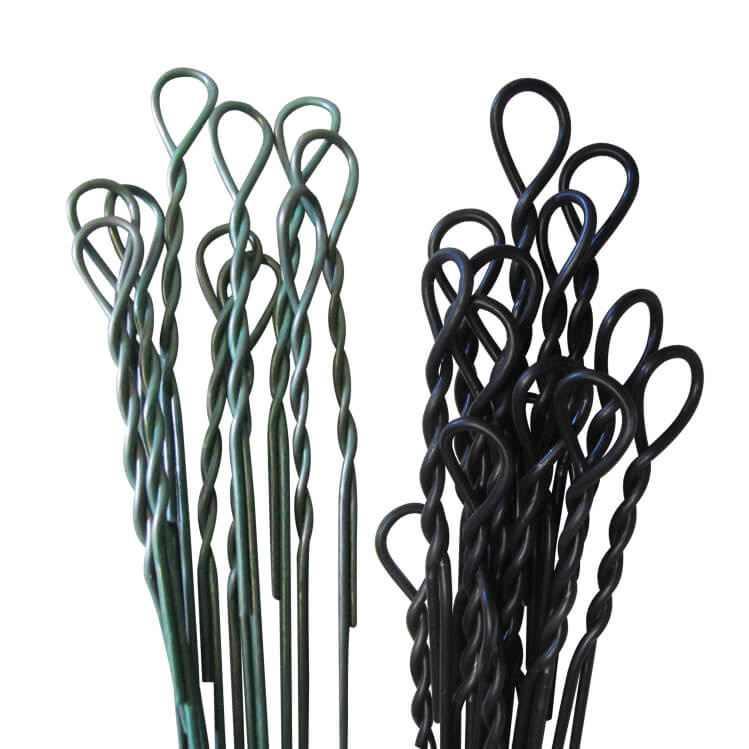
Spiral anchors, wire ties, support clips, and formed components that hold equipment together in food environments. These see less direct food contact but can accumulate moisture and biofilm. Specification: ASTM A276 Type 316, diameter 0.041" to 0.120", with heat treatment to control hardness.
The key difference across all these applications is exposure level. Direct food contact requires electropolished 316L. Indirect contact or splash zones can accept mill-finish 316. The regulatory framework (FDA, 3-A, NSF, USDA) distinguishes between direct and indirect contact, but we recommend treating all food processing environments with the same rigor. Why? Because contamination claims don't care about the distinction. Your auditors will.
Many food processors we work with ask the same question: "Can we use 304 for non-contact wire and 316 for product-contact only?" The answer is yes, technically. But operationally, this creates complexity, inventory management headaches, and audit risk. One brewery switched to all-316 across their entire facility - contact and non-contact - simply to eliminate specification error. Their audit notes dropped by 40%. The cost premium was negligible.
Surface Finish Matters: Electropolished vs. Mill Finish
You can have the right stainless grade and still fail a food audit if the surface finish is wrong.
Mill Finish (Standard)
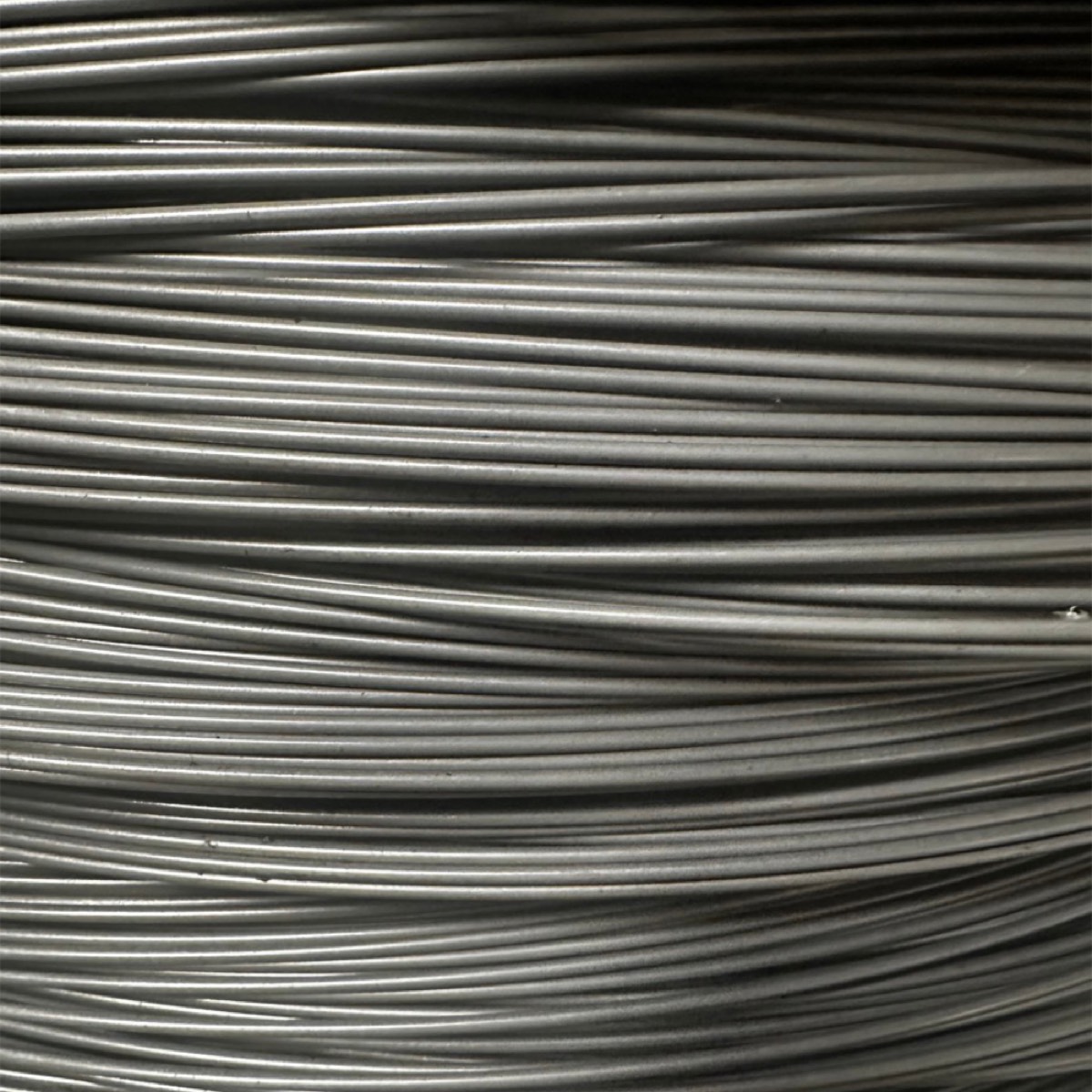
Fresh from the mill, stainless steel wire has a raw, oxidized surface with micro-imperfections. These surface irregularities - invisible to the naked eye - harbor bacteria and residue. In food processing, this isn't acceptable for product-contact wire. Mill finish works for hidden structural wire (supports, anchors) but not for screens or product-touching mesh.
Electropolished Finish
Electropolishing removes the oxide layer, fills micro-pores, and creates a smooth, passivated surface. The result: 80% reduction in surface roughness (Ra values drop from 3.2 µm to 0.4-0.8 µm). Bacteria have nowhere to hide. Residue rinses clean. Food auditors check for electropolished finish on food-contact wire as a standard requirement.
Cost comparison: Electropolished 316 wire runs 15-25% more than mill finish. For food processors doing multiple audits per year, that premium is insurance. The recall cost for contamination - even alleged contamination - is orders of magnitude higher.
Here's what we counsel our food industry clients: spec electropolished wire for anything that touches food or has direct splash exposure. The difference in cost is absorbed in the first week of operational savings - no rework, no audit findings, no follow-up documentation. We stock electropolished 316L wire mesh in standard apertures (10-200 mesh) from our warehouse with next-day delivery to Bay Area and Sacramento processors. Custom mesh frames and formed wire components also available electropolished with 2-3 week lead times.
The $4 Million Mistake - and How to Avoid It
Let's return to the Central Valley meat processor. Six years in, they'd built a solid regional reputation. Annual revenue: $28 million. Quality systems seemed solid. Then, one Monday morning, the FDA called.
A customer had discovered metal fragments in a package of ground beef. Not big enough to be visible - but big enough for a lab to identify as stainless steel. The processor's QC team traced it to the conveyor mesh in the cutting area. That mesh had been installed five years prior as a cost-cutting move: 304 stainless instead of 316, procured from a new supplier at $0.18/pound cheaper.
In the chloride-rich washdown environment (they used salt-based sanitizers), the 304 had started pitting within two years. Corrosion holes formed. Wire strands weakened and fractured. The fragments migrated into product.
The recall: 2.2 million pounds.
The cost breakdown:
- Destroyed product: $4.1 million
- FDA investigation and legal defense: $1.8 million
- Supply chain interruption (24 days shutdown): $900,000 in lost sales
- Brand recovery: Three years of price discounting and promotional spend to rebuild retail shelf space: $2.3 million
Total: $9.1 million.
The $0.18/pound savings on a one-time mesh installation? About $3,200.
Contrast this with a craft brewery on the West Coast. They spec'd 316L electropolished stainless wire mesh for hop filtration (0.015" diameter, 200 mesh count). Western Steel & Wire provided ASTM A276 certification, mill test reports, and traceability from Kiswel (Korean mill partner with NSF listing). The setup cost: $18,000 all-in for a custom mesh frame. Their food safety audit? Zero findings. The brewery passed certification on the first attempt. "Our previous supplier couldn't tell us what grade the mesh was," their operations manager told us. "Western Steel & Wire gave us full material traceability from the mill. That made all the difference in our audit."
Frequently Asked Questions
What grade of stainless steel is considered food-safe?
ASTM A276 Type 316 or 316L is the standard for food contact wire. 304 stainless is acceptable for non-product-contact structural applications in food facilities (e.g., hidden supports, anchors), but never for conveyor mesh, screens, or components touching food or food-contact surfaces.
Is 304 stainless steel OK for food processing applications?
304 stainless is not recommended for direct food contact in most environments. It will pit under chloride exposure (washdown protocols, brined products, salt spray) within 2-5 years, creating corrosion pits that harbor bacteria and can fragment into product. For food processors, 304 is a false economy.
What surface finish is required for food-contact wire?
Electropolished finish is the industry standard for food-contact wire. It reduces surface roughness to 0.4-0.8 µm Ra (vs. 3.2+ µm for mill finish), eliminating micro-pores where bacteria and biofilm accumulate. Most food audits and NSF certifications require electropolished wire for product-contact mesh and screens.
Do I need FDA approval before installing food-contact wire in my facility?
No, but you need material certification. You must ensure your wire supplier provides ASTM A276 mill test reports proving the grade and metallurgical composition. The FDA doesn't pre-approve wire, but they will audit your wire's documentation. If you can't prove Grade 316 with a mill cert, you'll fail inspection.
How often should food-contact wire be inspected or replaced?
316 stainless wire with proper maintenance should last 8-12 years in typical food processing environments. However, chloride-heavy washdown areas may shorten this to 5-7 years. Best practice: conduct visual inspection every 12 months, checking for pitting, discoloration, or corrosion. Replace wire if pitting is visible or if tensile strength testing shows more than 10% loss.
The Bottom Line
Food safety auditors don't accept "probably stainless." Every coil we ship comes with full mill certification and ASTM traceability. We stock 316 and 316L wire in diameters from 0.008" to 0.250", with electropolished finishing available for all food-contact applications.
Whether you're specifying conveyor mesh, drying screens, or wire forms for food equipment, Western Steel & Wire has the inventory, the certifications, and the food industry experience to eliminate guesswork. We work with breweries, dairy processors, meat facilities, and ingredient suppliers across California and the West Coast.
Visitwesternsteelwire.com
or call us today to spec the right stainless wire for your food processing line. We'll provide material certifications upfront and ensure your wire passes every audit.

Comments (0)
Leave a Comment