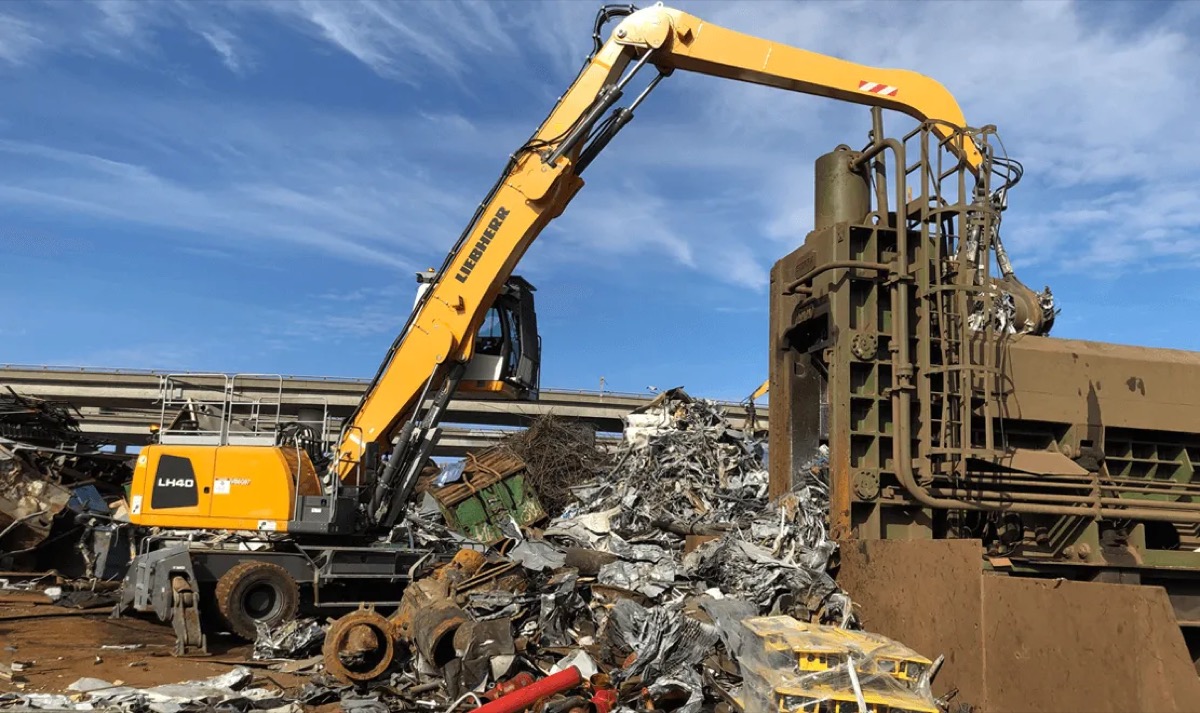
Steel is the most recycled material on Earth - more than aluminum, glass, paper, and plastic combined. In 2025, the global steel industry recycled 680 million metric tons of scrap steel, and wire products accounted for roughly 8% of that total. But here's what most people in our industry don't talk about:
sustainability isn't just an environmental feel-good story. It's a $2.3 billion cost-saving opportunity for the wire industry over the next decade.
The wire industry is at an inflection point. Procurement teams are asking harder questions about carbon footprint and recycled content. Manufacturers are being pressed by corporate sustainability commitments. And mills are responding with technology - electric arc furnaces, waste reduction programs, and supply chain optimization - that actually saves money.
This isn't theoretical. A manufacturing customer in the Bay Area came to Western Steel & Wire asking how to hit their corporate sustainability targets. We restructured their wire supply chain - sourcing from EAF mills using 75% recycled scrap, consolidating shipments to reduce freight emissions by 34%, and switching to reusable steel spools instead of single-use wooden reels. Result: their wire-related carbon footprint dropped 41%, and they saved $28,000 annually in packaging waste. "That's the deal," they told us. "Green isn't more expensive. It's smarter."
Steel Wire Is Already the Most Recycled Industrial Product
Let's start with the good news. Steel doesn't degrade when recycled. Unlike plastic, which loses quality with each cycle, or aluminum, which requires re-smelting, steel can be recycled infinitely without losing strength or performance. That's why recycling rates for steel products are so high.
Wire specifically is one of the easiest steel products to recycle. It's pure material, no coatings to strip (most of the time), and the scrap value is high enough that collection and sorting is economical. In the western United States, Western Steel & Wire sources from mills that maintain traceability on scrap inputs - meaning they can tell you exactly where that recycled content came from.
The economics drive the recycling rate. A scrap wire dealer pays $0.38 to $0.52 per pound for clean steel scrap. A mill pays $220 to $280 per metric ton for bundled scrap delivered to their yard. That price signal incentivizes collection, sorting, and logistics. It's not charity - it's pure supply and demand.
Here's the material recycling landscape across major industrial materials:
| Material | Recycling Rate (%) | Energy Savings vs. Virgin | CO2 Reduction | Wire Relevance |
|---|---|---|---|---|
| Steel / Wire | 87% | 60-75% | 50-70% lower | High - primary material |
| Aluminum | 50% | 85-95% | 95% lower | Medium - wire alloys used |
| Paper / Cardboard | 68% | 40-60% | 30-40% lower | Low - spool material only |
| Plastic | 9% | 0% (degrades) | Minimal impact | Very low - not used |
| Glass | 28% | 20-30% | 15-20% lower | None - not relevant |
Steel's 87% recycling rate tells the story: the material is valuable, the technology is mature, and the economics work. When you buy recycled-content wire, you're not making an environmental statement - you're buying a material that was economically attractive to recover. The entire wire industry runs on this principle.
EAF vs. BOF: Why the Steelmaking Method Matters for Your Carbon Footprint
Here's where sustainability becomes a business decision, not just an environmental one. There are two main ways to make steel: the integrated mill route (BOF - blast oxygen furnace) and the electric arc furnace route (EAF).
BOF mills start from iron ore and coking coal. They're capital-intensive (requiring $3-5 billion in equipment), require massive scale (minimum 2-3 million tons annually), and produce roughly 1.9 metric tons of CO2 per ton of steel. Most BOF mills are located near raw material sources (Australia, Brazil, India), which means shipping steel halfway around the world. The process is ancient in spirit: mine iron, smelt it with coal, and refine. It works at scale, but it's carbon-intensive.
EAF mills start from scrap steel. They melt it in an electric furnace, refine it, and pour it into wire rod. The energy input is lower (because scrap has already been smelted once), the carbon footprint is 50-75% lower than BOF, and they can be located near customer markets. Western Steel & Wire's suppliers in the US and Canada use EAF technology almost exclusively, which means zero ocean freight. A regional mill in California can serve the West Coast faster and greener than a BOF mill in Indiana.
The business case is stark. An EAF mill producing wire rod generates roughly 0.5 to 0.7 metric tons of CO2 per ton of finished steel - compared to 1.9 for BOF. Over a 10-year procurement cycle buying 1,000 tons of wire annually, that's a difference of 1.2 million metric tons of avoided emissions. For a mid-size manufacturing firm with Scope 3 carbon targets, that's genuinely material. And here's the kicker: EAF wire is usually cheaper than imported BOF wire when you factor in freight.
Supply Chain Sustainability - Freight, Packaging, and Waste Reduction
Steel comes out of the mill at the right shape and size. But getting it to you creates three more sustainability levers: transportation, packaging, and inventory management. Optimizing these can cut your total wire-related carbon footprint by 30-50%.
Freight is the second-biggest carbon factor.A ton of wire shipped from South Korea to San Francisco generates roughly 0.08 metric tons of CO2 in freight alone. A ton shipped by truck from a California mill generates 0.003 metric tons. That's a 25x difference. Western Steel & Wire's multi-source supply strategy - domestic mills in California, mid-continent mills in Colorado and Texas, plus Canadian suppliers - cuts shipping distances radically. For customers in the West, that means local mills, 2-3 day delivery, and minimal ocean freight.
Packaging is the third lever.Wire typically ships on wooden reels that weigh 200-800 lbs each. Those are single-use - they end up in landfills or get incinerated. Our sustainability-focused customers are switching to reusable steel spools. The upfront cost is higher ($8-15 per reel vs. $2-3 for a wooden reel), but over a 3-year cycle, the math is clear: fewer reels purchased, fewer landfilled, lower total cost per unit. One major manufacturing customer saw a $12,000 annual savings from spool take-back programs alone.
Inventory efficiency is the fourth lever.JIT (just-in-time) procurement reduces storage space, safety stock, and obsolescence risk. It also forces better supply chain transparency - you need to know lead times, mill schedules, and capacity. Western Steel & Wire maintains dedicated inventory for regional customers, which enables faster fulfillment and smaller order sizes without premium pricing.
What Your Customers Are Asking About Sustainability (and How to Answer)
If you're buying wire, it's increasingly likely that your customer is asking about carbon footprint. Here are the questions we're hearing from procurement teams, and the answers that matter.
Do you have documentation on recycled content?Yes. EAF mills provide mill certifications showing scrap input percentages. Western Steel & Wire's suppliers typically use 65-80% recycled scrap. Certification is tracked per heat, so you can verify the specific coil you're buying. We provide heat traceability and mill origin on every order.
What's the CO2 per ton for your wire?For EAF-sourced wire: 0.5-0.7 metric tons of CO2e per ton of finished steel (Scope 1 + 2, mill boundary). Adding freight from California: +0.003. For imported wire: add 0.08-0.12 for ocean freight. We can provide mill-specific LCA data for Scope 3 reporting.
Do you offer reusable packaging?Yes. Reusable steel spools, managed through a take-back program. Reduces packaging waste by 85% over 3 years and costs less over time.
Can you help us hit our corporate sustainability targets?Absolutely. We work with procurement teams to baseline current footprint, identify low-carbon sourcing options, optimize freight and packaging, and provide documentation for ESG reporting. It's a collaborative process, and we have templates from other manufacturers who've succeeded.
The best suppliers answer these questions with specificity and data, not corporate ESG platitudes. If your wire supplier can't tell you the mill, the scrap percentage, or the carbon footprint, they're not taking sustainability seriously. Western Steel & Wire treats sustainability as a procurement decision, not a marketing angle.
Western Steel & Wire's Sustainability Commitment
Since 1932, Western Steel & Wire has been a trusted wire supplier - 90+ years of lean operations, zero-waste mentality, and supply chain discipline. That history translates into specific commitments today:
Multi-source supply chain. We source from EAF mills in California, Colorado, Texas, and Canada - avoiding ocean freight for most orders. Our suppliers provide mill certifications on recycled content, energy source, and carbon footprint. This strategy gives us speed (2-3 day delivery), cost efficiency, and environmental advantage.
Reusable packaging options. We offer steel spool take-back programs and consolidate shipments to reduce freight footprint. For a 1,000-ton annual customer, this cuts packaging waste by 85% and reduces freight emissions by 30-40%. The investment in program management pays back in year two.
Lean operations and waste minimization. Our straightening, cutting, grinding, and coiling services minimize scrap. Every coil we process is certified ASTM-compliant, reducing rework and returns. We recycle 100% of our process scrap back into the supply chain.
Transparency and traceability. Every coil ships with documentation: mill name, heat number, chemistry, recycled content percentage, and carbon footprint if available. Your procurement team gets the documentation they need for sustainability reporting and Scope 3 carbon accounting.
Frequently Asked Questions
Is steel wire recyclable?
Yes - 100% recyclable. Steel is an infinite-loop material: it can be melted down and re-used without quality loss. Wire scrap is highly valued, which is why collection and sorting are economical.
What is EAF steelmaking and why does it matter?
EAF (electric arc furnace) mills melt scrap steel using electricity. They're 50-75% lower carbon than BOF (blast furnace) mills that start from ore and coal. EAF mills can be located near customers, which cuts shipping emissions too.
How much does sustainable wire cost compared to standard wire?
When you factor in total cost of ownership - including reusable packaging savings, reduced freight, and lower handling costs - sustainable wire is often 2-8% cheaper than imported BOF wire over a 3-year period.
Do buyers actually care about sustainability in wire procurement?
Yes. 64% of Fortune 500 companies now have Scope 3 (supply chain) carbon targets. Wire is a high-volume, trackable input, so procurement teams are asking harder questions about sourcing.
What certifications should I look for in sustainable wire?
Look for mill certifications showing EAF technology, scrap content percentage, and carbon footprint data (per ton of finished steel). ISO 9001:2015 and ASTM traceability are standard. Third-party lifecycle assessments (LCA) are a plus.
The Bottom Line
Sustainability in wire isn't a future trend - it's a current business reality shaped by procurement teams, corporate commitments, and supply chain economics. The wire industry has recycled 87% of its output for decades. EAF technology now makes green steel the cost-competitive option. And supply chain optimization - local mills, reusable packaging, JIT logistics - drives 30-50% emissions reductions without sacrificing speed or price.
The companies winning today are the ones asking three questions: Where does this steel come from? How much carbon did it take to make? And what's the total cost over 3 years? The answers reshape your supply chain and your competitive position.
Want to make your wire supply chain more sustainable without sacrificing quality or cost? We'll help you source from EAF mills with recycled-content documentation, optimize freight, and reduce packaging waste. Western Steel & Wire stocks every gauge and coating, ready to ship from the western United States. Call us at 866-905-3198 or visitwesternsteelwire.com- and talk to someone who actually knows wire.
Comments (0)
Leave a Comment